April 24, 2026 Manisha Maurya
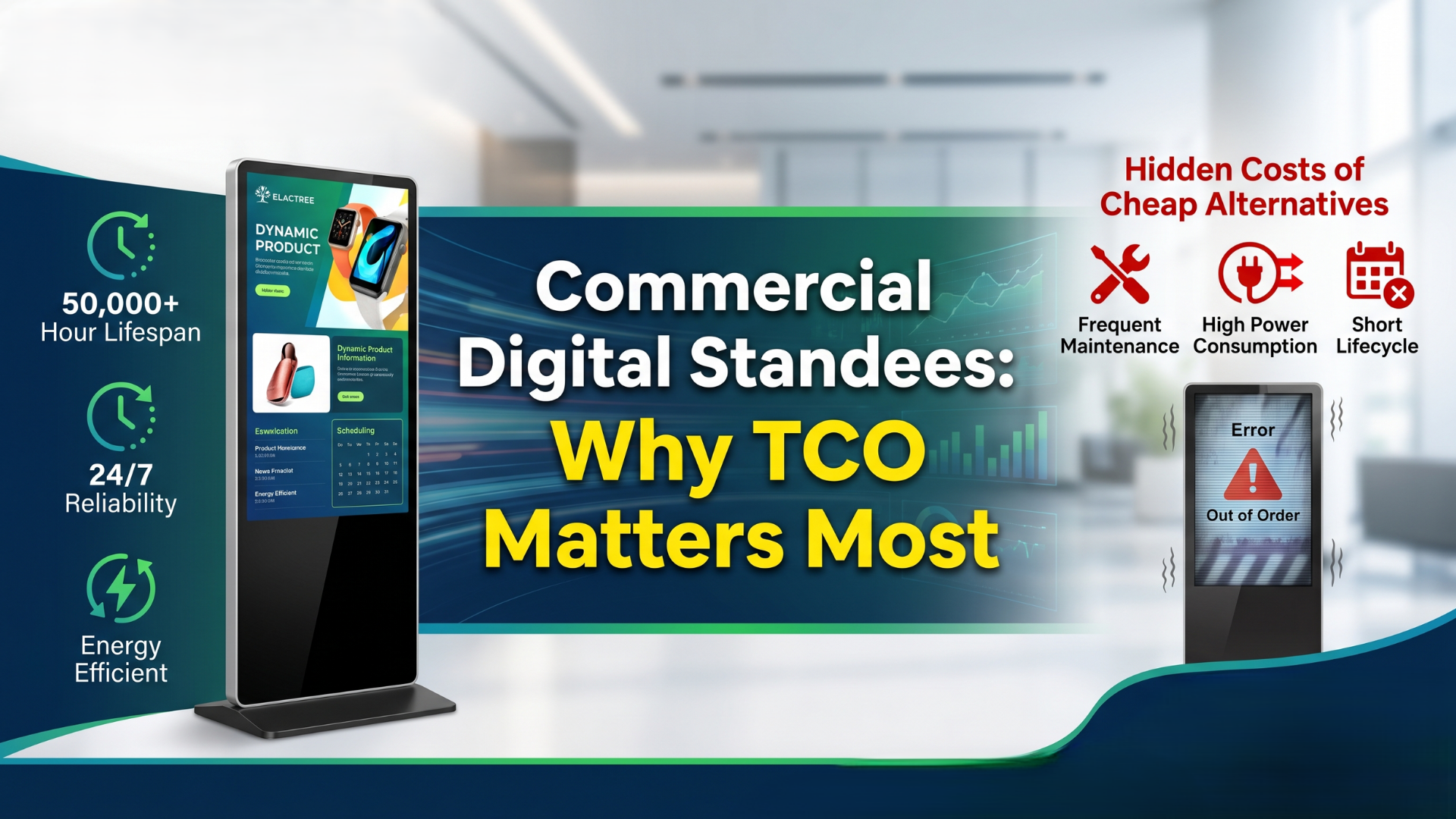
Think you scored a massive discount on that new digital standee? Think again. While the upfront sticker price might look like a steal, hidden maintenance, downtime, and replacement fees are quietly draining your budget. Here is the true cost of cheap displays—and how to calculate real ROI.
When upgrading your business's visual communication, the allure of low-cost hardware is strong. However, in the fast-paced commercial sectors we navigate daily, treating digital signage like a disposable commodity is a costly mistake. Let's break down why investing in professional commercial digital standees is the only way to protect your bottom line.
When purchasing a digital display, the invoice only tells part of the story. Total Cost of Ownership (TCO) is the comprehensive financial calculation of acquiring, operating, maintaining, and eventually replacing that hardware.
For cheap displays, the initial price is low, but the TCO skyrockets within the first 18 months due to constant repairs. For a true commercial-grade display, the initial investment is higher, but the TCO remains flat and predictable over a 5-to-10-year lifecycle, resulting in a vastly superior digital signage ROI.
Many businesses unknowingly purchase consumer-grade screens disguised as commercial kiosks. These generic units simply aren't built to survive the grueling realities of commercial environments, from extended operating hours to temperature fluctuations.
Here is what you are actually missing when you skip professional hardware:
The 24/7 Operation Reality: Consumer panels are engineered to run 6 to 8 hours a day. Push them past that, and the internal components overheat. True commercial standees feature advanced thermal management designed for 24/7 continuous looping.
Vivid Nits Brightness: A standard TV or cheap standee outputs around 250 to 300 nits. Place that in a sunlit corporate lobby or a brightly lit retail storefront, and the screen washes out completely. Professional displays push 500 to 800+ nits, ensuring your message cuts through the glare.
Seamless Digital Signage Software Integration: Cheap imports often run on outdated, consumer-level operating systems. Professional standees offer secure, enterprise-ready software integration, preventing unauthorized casting and network vulnerabilities.
Choosing an Elactree commercial standee means shifting your strategy from "buying screens" to "investing in an automated communication channel."
Exceptional Hardware Longevity: Commercial displays boast a significantly higher Mean Time Between Failures (MTBF), often rated for 50,000 to 100,000 hours of use.
Robust Warranty Coverage: When a consumer screen dies in a commercial setting, the manufacturer will void the standard warranty. Commercial hardware comes with comprehensive, multi-year support agreements.
Predictable Budgeting: True TCO means no surprise repair bills or sudden capital expenditures for hardware replacements in year two.
| Metric | Cheap / Consumer-Grade Standees | Elactree Commercial Digital Standees |
| Initial Price | Low (Appears highly cost-effective) | Moderate to High (Investment level) |
| Lifespan (MTBF) | 15,000 - 30,000 hours (1-2 years) | 50,000 - 100,000 hours (5-10 years) |
| Operating Hours | 8/7 (Prone to overheating) | 24/7 (Advanced cooling technology) |
| Maintenance Cost | Extremely High (Frequent part replacements) | Low (Durable commercial components) |
| Brightness (Nits) | ~250 - 300 Nits (Washes out in daylight) | 500 - 800+ Nits (Vivid in all lighting) |
| True TCO (5 Years) | High (Multiple replacements + downtime) | Low (One-time investment + stable ROI) |
Beyond the physical hardware, there is an invisible cost to cheap digital signage: brand embarrassment.
When a customer walks into your facility and sees a glitching screen, a patch of dead pixels, or a glaring "No Signal" message, it subconsciously damages your brand's authority. Furthermore, every hour a screen is dark is an hour of lost advertising impressions.
Digital standee maintenance shouldn't be a weekly headache for your IT or facilities team. Every time a technician has to troubleshoot a failing generic screen, your business bleeds money.
Treating your visual communication infrastructure as a cheap commodity will inevitably cost you more in the long run. By calculating the true Total Cost of Ownership, it becomes clear that investing in high-quality, commercial-grade hardware is the only sustainable choice.
Stop wasting budget on temporary fixes. Upgrade your commercial spaces with interactive, high-nits, 24/7-rated displays engineered for absolute reliability. Explore Elactree's full range of premium commercial digital standees and secure your long-term ROI today.
Total Cost of Ownership (TCO) for digital standees includes the initial purchase price plus all long-term expenses. This encompasses installation, software licensing, content management, maintenance, electricity, and hardware replacement over the lifespan of the commercial display to give an accurate financial picture.
Commercial digital standees are built for continuous 24/7 operation. They feature highly durable components, extreme brightness levels for public spaces, advanced cooling systems, and robust warranties. Consumer displays lack this hardware longevity, leading to frequent, costly failures in demanding business environments.
A high-quality commercial digital standee typically lasts between 50,000 to 100,000 hours, equating to roughly 5 to 10 years of continuous operation. Conversely, cheap consumer-grade alternatives often fail within 1 to 2 years under similar 24/7 commercial stress and usage.
Downtime destroys digital signage ROI by immediately halting customer engagement and advertising revenue. Furthermore, repairing a broken display involves expensive technician fees, replacement parts, and lost administrative time. These recurring hidden costs quickly eliminate the initial savings of a cheap standee.

 Interactive flat Panel
Interactive flat Panel
Interactive flat Panel
 Interactive flat Panel
 Interactive flat Panel
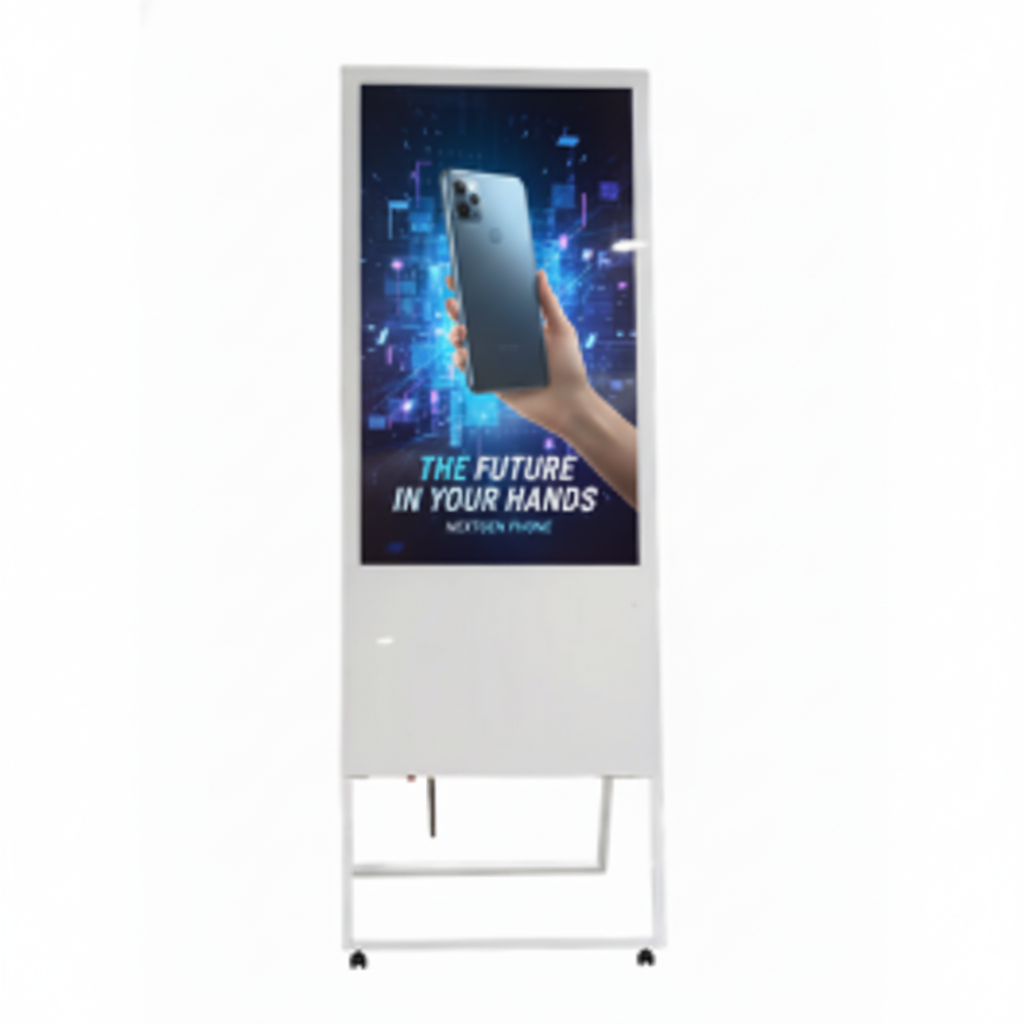
Elevate your messaging with the A-Type Digital Standee, featuring the vibrant and dependable Samsung QBR Commercial Signage Display. This sleek,...
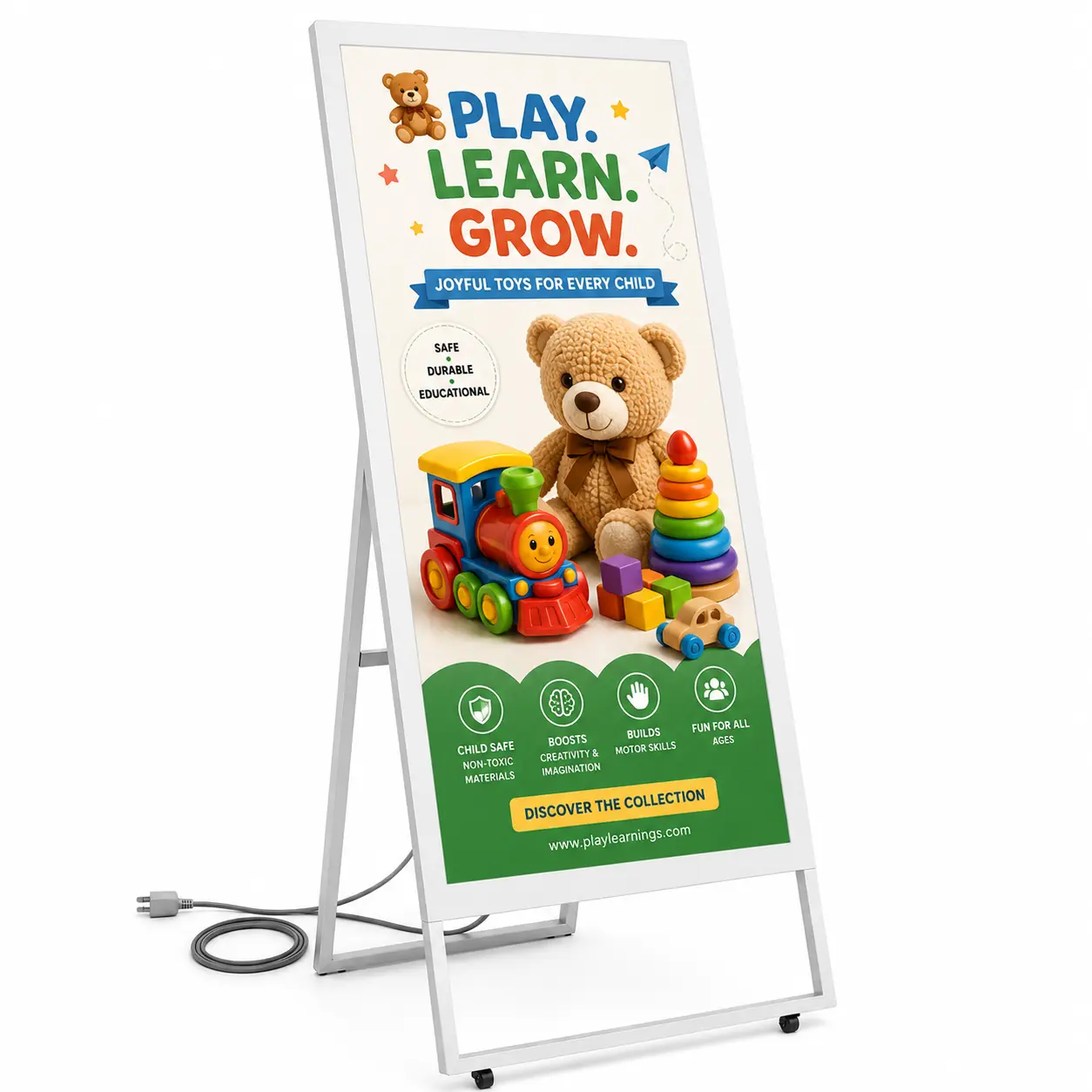
Elevate your messaging with the A-Type Digital Standee, featuring the vibrant and dependable Samsung QBR Commercial Signage Display. This sleek,...
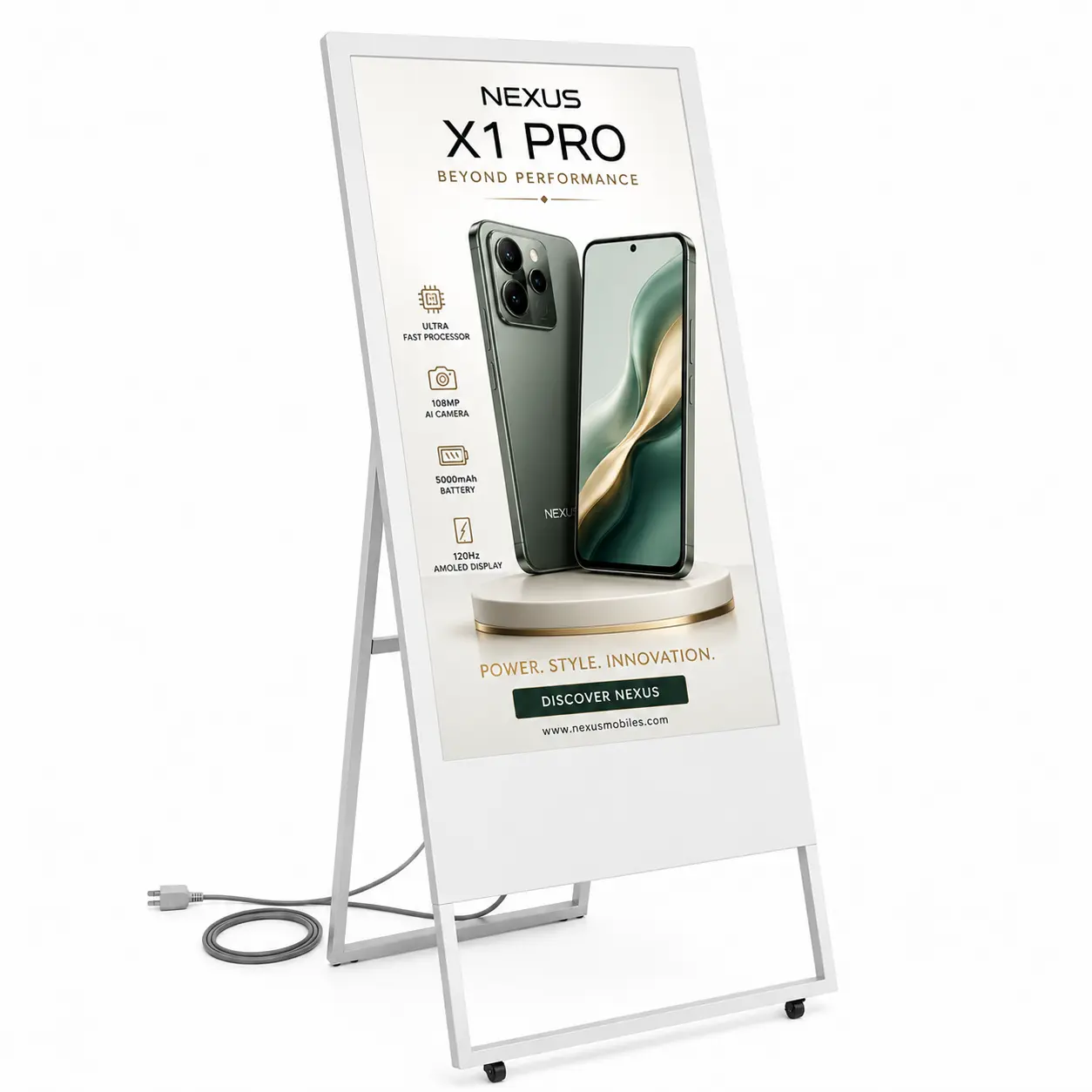
Elevate your messaging with the A-Type Digital Standee, featuring the vibrant and dependable Samsung QBR Commercial Signage Display. This sleek,...
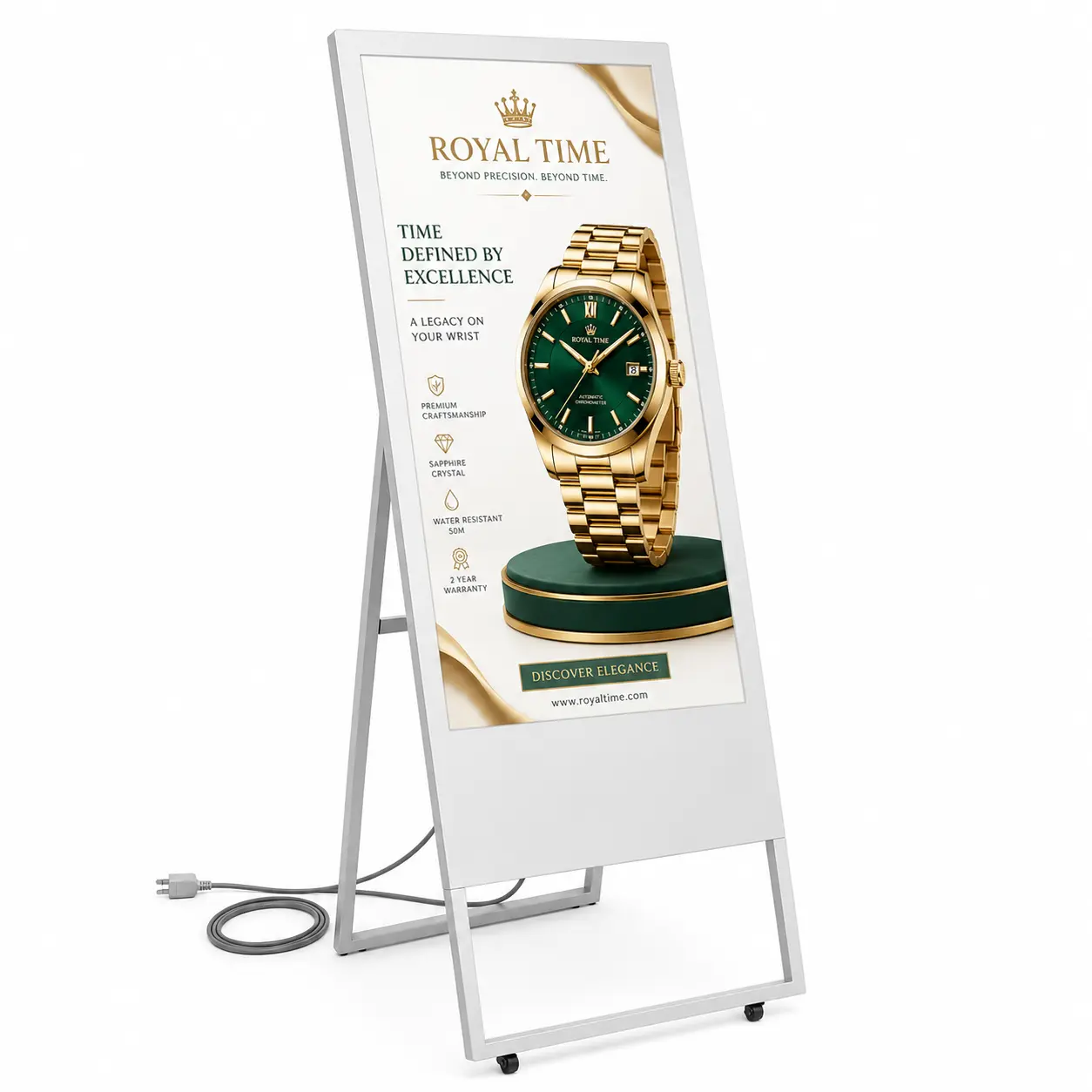
Elevate your messaging with the A-Type Digital Standee, featuring the vibrant and dependable Samsung QBR Commercial Signage Display. This sleek,...