March 25, 2026 Manisha Maurya
Walking down the electronics aisle at your local big-box store, it’s tempting to grab a massive, high-definition consumer TV for your business. The price tag looks great, the picture is stunning, and it seems like a quick fix for your digital menu board or lobby display.
What is the difference between a commercial TV and a regular TV?
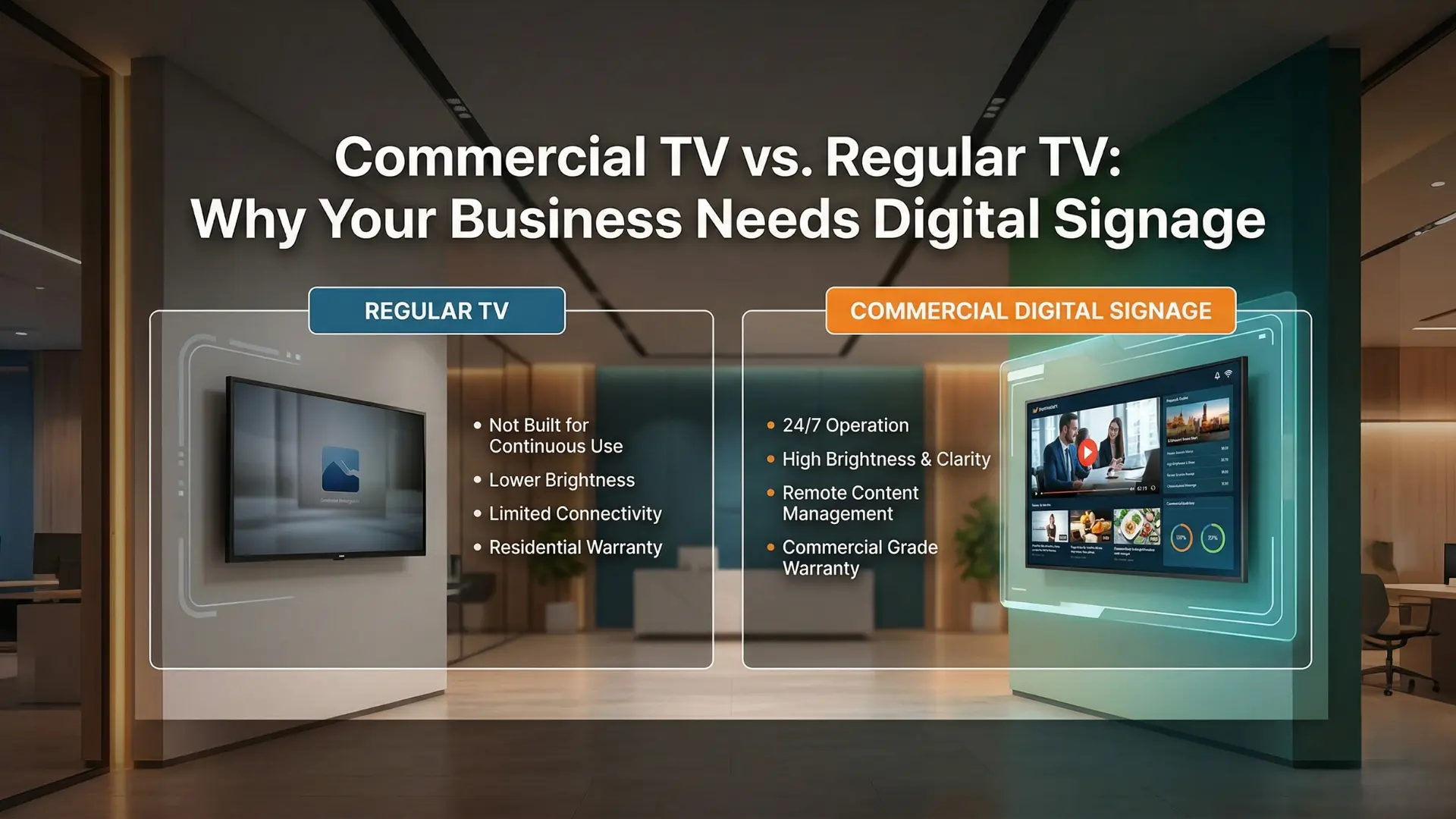
The main difference between a commercial TV and a regular TV lies in its hardware components, operational hours, and warranty. Regular consumer TVs are built for residential use, designed to run 4 to 6 hours a day. Commercial TVs, however, are engineered with heavy-duty cooling systems and commercial-grade components designed to run continuously for 16 to 24 hours a day without screen burn-in or hardware failure. Furthermore, using a regular TV in a business environment immediately voids its manufacturer warranty.
If you are planning a digital signage project, you need to know how the hardware stacks up. Here are the top five differences.
Regular TVs are designed for living rooms. They are built to be watched for a few hours in the evening and turned off. If you leave a consumer TV on for 14 hours a day in a restaurant, the internal components will quickly overheat.
Regular TV: Rated for 4–6 hours of daily use.
Commercial TV: Rated for 16/7 or 24/7 continuous operation, equipped with thermal management to dissipate heat.
Living rooms are typically dimly lit, so consumer TVs don’t need to be exceptionally bright. Businesses, on the other hand, have large windows, bright fluorescent lights, and outdoor exposure.
Regular TV: Usually peaks at around 250–300 nits of brightness.
Commercial TV: Ranges from 400 to over 2,500 nits. They also feature anti-glare, matte finishes so your menu or message is readable from any angle, even in direct sunlight.
3. Warranties Designed for Business
This is the most critical financial difference. If you use a consumer TV in a commercial setting, you void the warranty instantly. * Regular TV: 1-year limited warranty (voided if used for business).
Commercial TV: 2 to 3-year commercial warranties, often with on-site service guarantees so you don't have to ship a 65-inch screen across the country if it breaks.
The last thing you want is a customer picking up a universal remote or using their smartphone to change your lobby screen to a rival sports game—or worse.
Regular TV: Easy to access, standard IR receivers, pop-up consumer menus ("Please update firmware").
Commercial TV: Features panel lockouts, hidden IR receivers, RS232C ports for central computer control, and no annoying smart-hub pop-ups.
Commercial screens look professional. They have ultra-thin, symmetrical bezels (the frame around the screen), making them perfect for mounting vertically (portrait mode) or tiling together for a massive video wall. Consumer TVs generally have a thicker bottom bezel with a glowing brand logo, which looks awkward when turned sideways.
While the upfront cost of a consumer TV is lower, the Total Cost of Ownership (TCO) is significantly higher. If you opt for a regular TV, expect:
Screen Burn-in: Static images (like a digital menu or a logo) will permanently burn into a consumer screen within weeks.
Shorter Lifespan: A consumer TV will likely die within a year under heavy commercial use.
Brand Damage: A black screen, a distorted image, or a "Volume Up" icon stuck on the screen looks unprofessional to your customers.
Investing in proper commercial digital signage isn't just about avoiding hardware failure; it’s about active business growth. A proper commercial display allows you to:
Boost Sales: Bright, dynamic content catches the eye and increases point-of-sale purchases.
Save on Printing: Never print another static poster, menu, or promotional banner again. Update your screens instantly from your computer.
Enhance Customer Experience: Reduce perceived wait times in lobbies or queues with engaging, crisp visual content.
Technically, yes, you can plug a USB or signage player into a smart TV. However, it is highly discouraged. Smart TVs are not built for constant operation, lack brightness for commercial environments, and using them for business voids their warranty.
A commercial-grade monitor is a display engineered specifically for commercial, industrial, or public use. They feature durable hardware, advanced cooling, high brightness, and PC-based controls for 24/7 reliability.
A high-quality commercial TV can last anywhere from 50,000 to 100,000 hours of continuous use. This translates to about 5 to 10 years, even when running 24 hours a day, far outlasting regular TVs.
Understanding the difference between a commercial TV vs. regular TV is the first step in building a successful digital signage strategy. Don't fall into the trap of buying a cheap living room TV for your storefront. By investing in commercial-grade displays, you ensure your message is always bright, professional, and reliably running when your customers need to see it.
Author Note: This guide was compiled by commercial AV specialists with years of experience designing, integrating, and maintaining enterprise-grade visual communication systems.

 Buying guides
 Buying guides
 Buying guides