
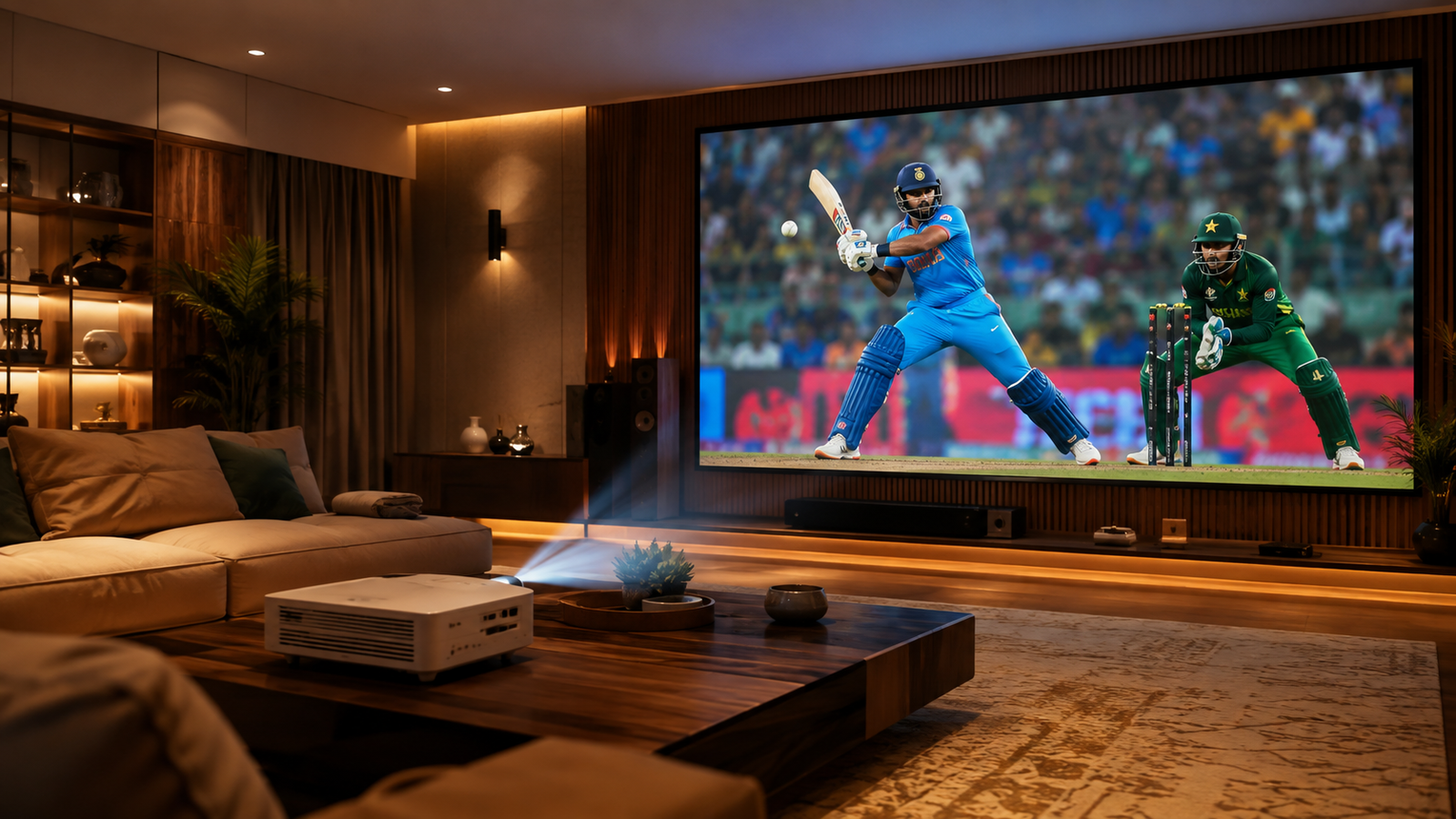
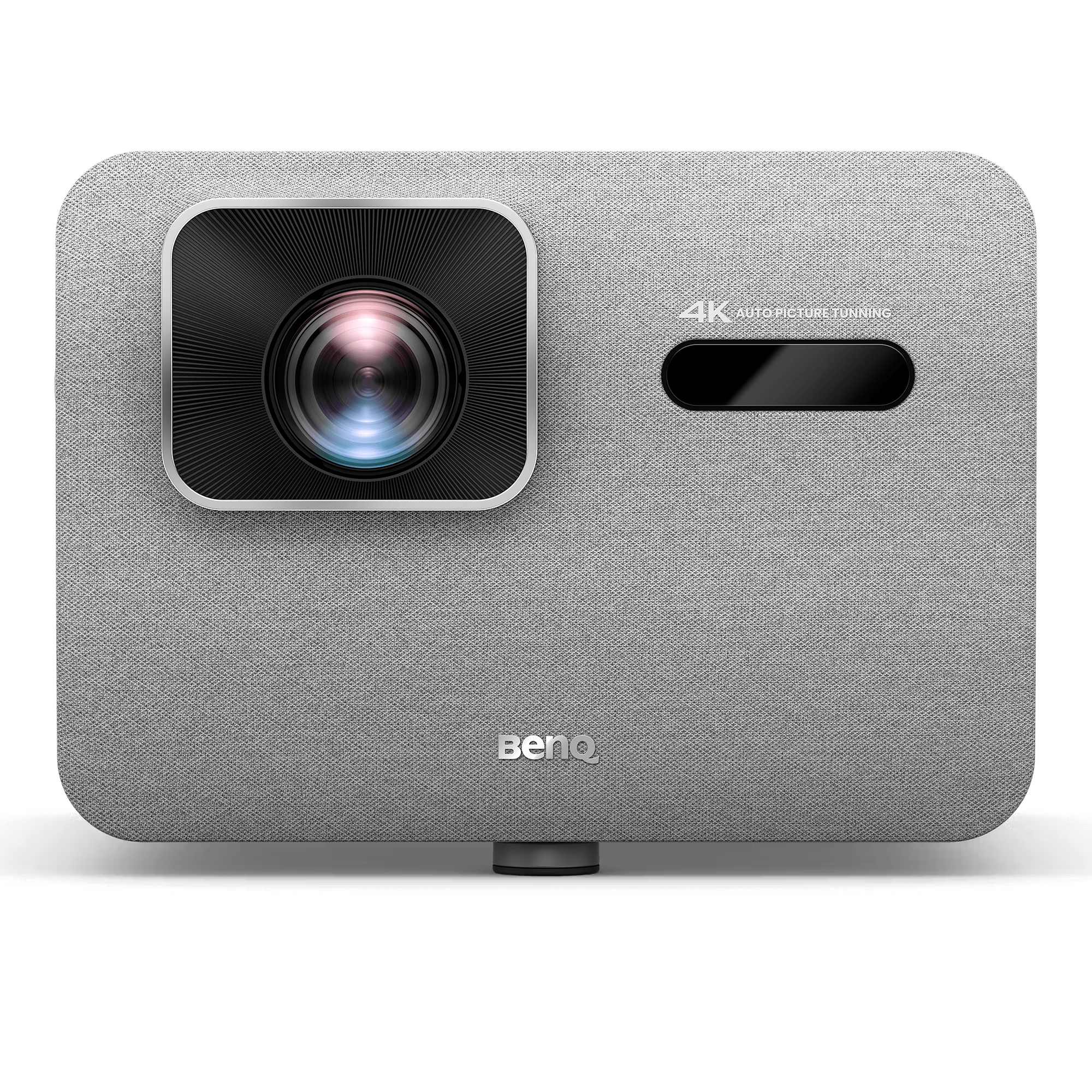


The BenQ TK705STi is a versatile 4K UHD (3840 x 2160) short-throw projector designed to deliver cinematic movies and immersive gaming in smaller spaces. Featuring…
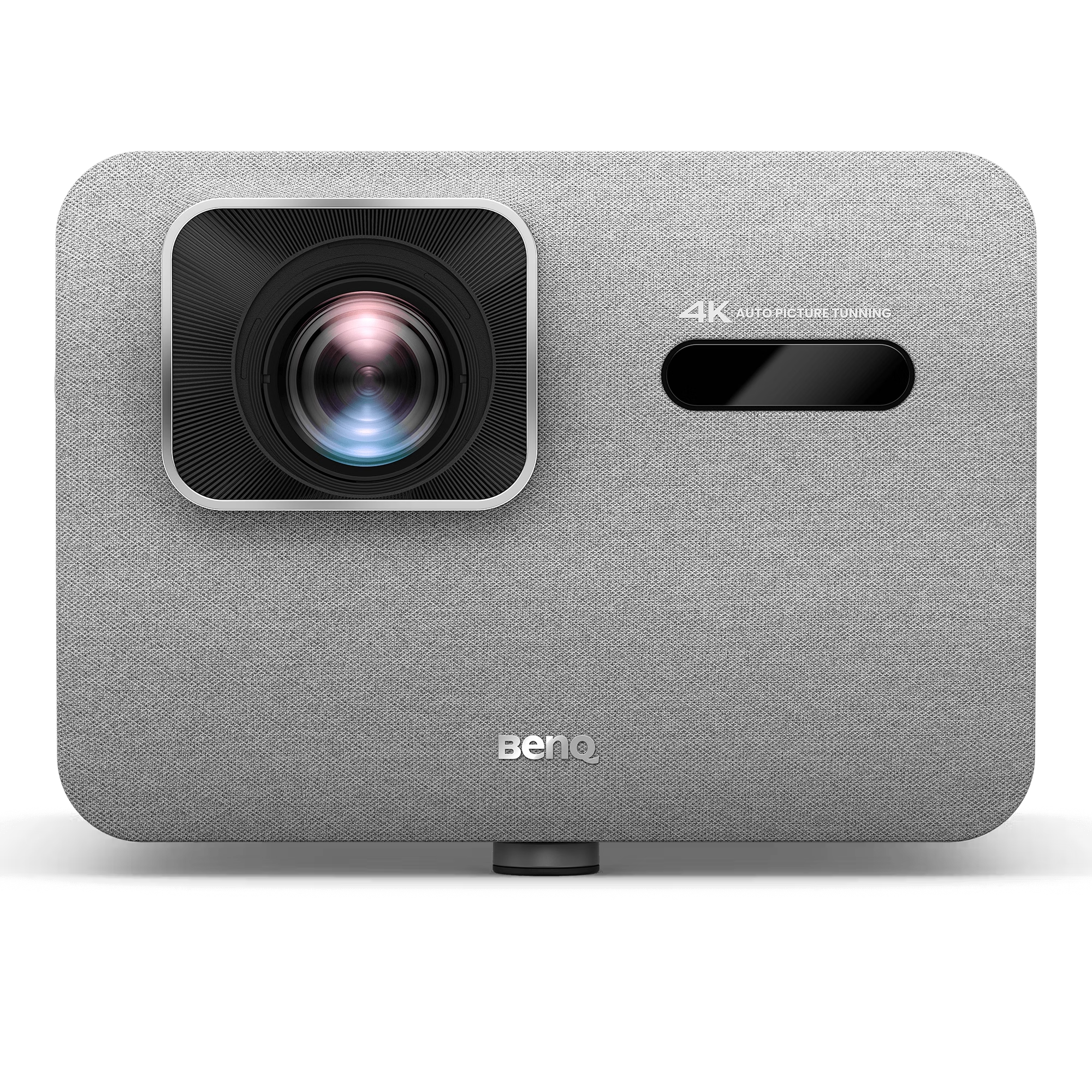


The BenQ TK705i is a versatile 4K UHD (3840x2160) home entertainment projector featuring a bright 3,000 ANSI lumen LED light source for clear, cinematic visuals…
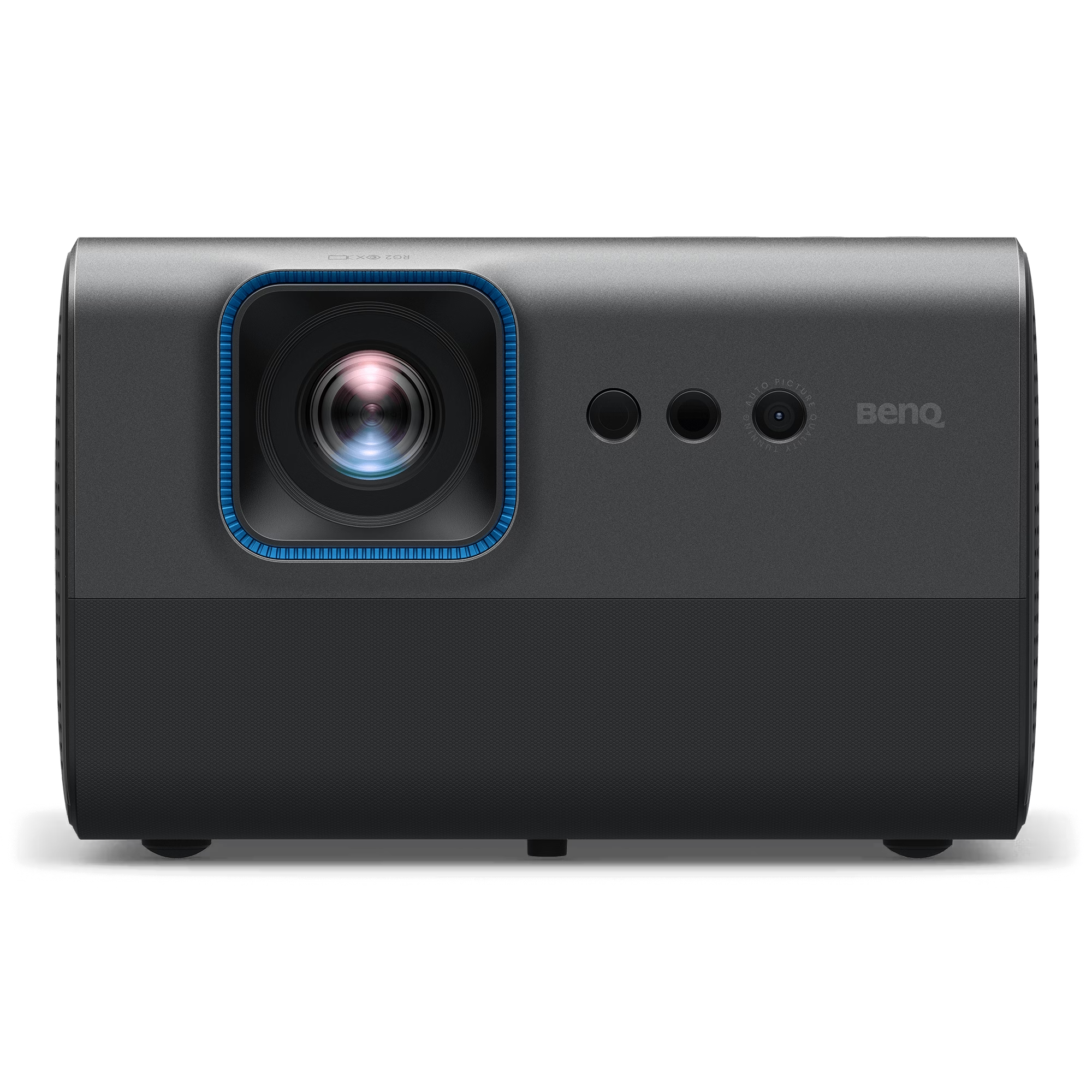


The BenQ GP520 is a powerful, smart 4K UHD (3840x2160) Home Entertainment Projector that delivers a stunning big-screen experience up to 180 inches. With 2600…
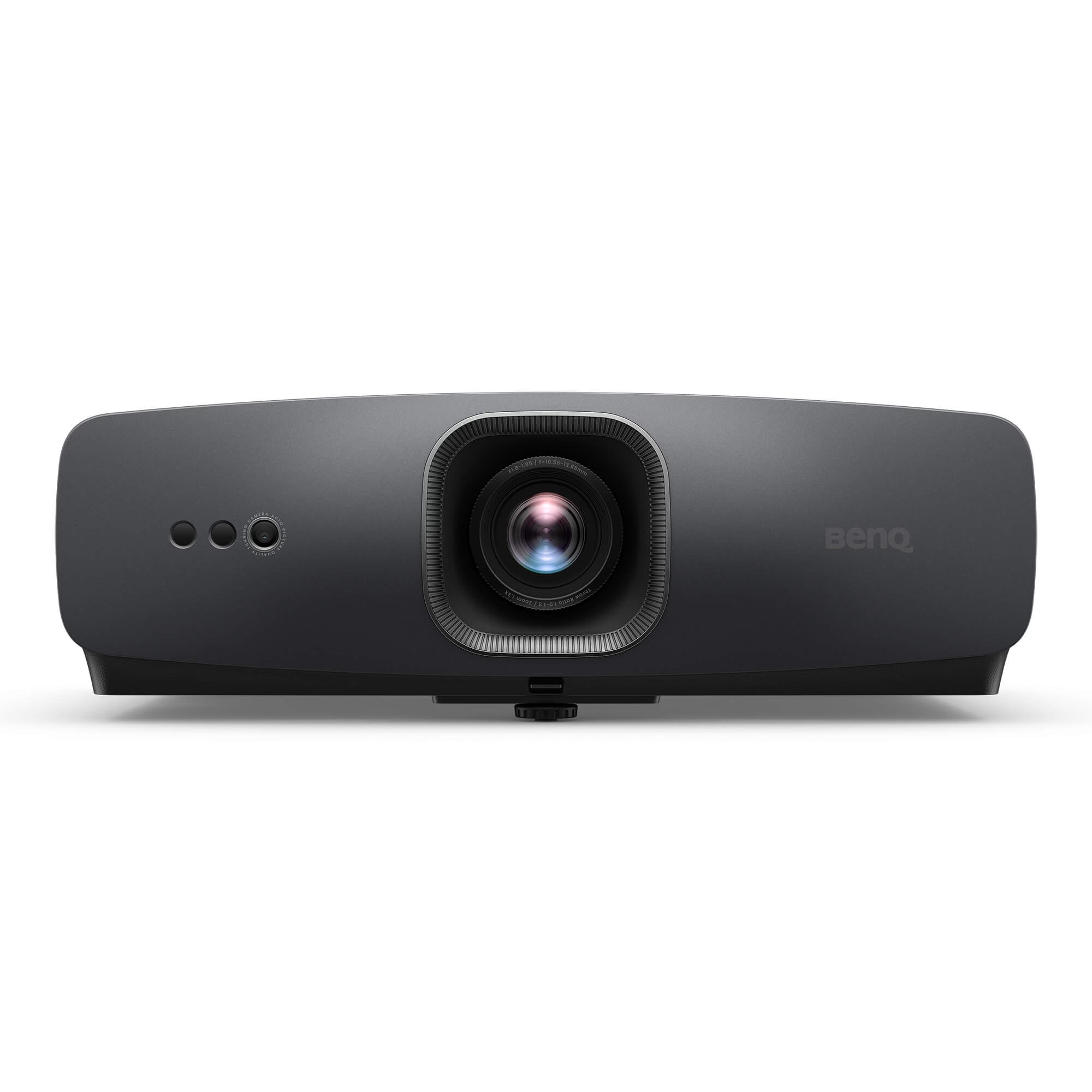


The BenQ W2720i is a premium 4K UHD (3840x2160) LED Home Theater Projector designed for cinematic enthusiasts, delivering 2500 ANSI Lumens of brightness for vivid…


The BenQ TK860i is a True 4K UHD (3840 x 2160) home theater projector engineered to deliver an immersive cinematic experience even in well-lit…


The BenQ W5800 is a high-end True 4K (3840x2160) Laser Projector designed for dedicated home cinema enthusiasts. It utilizes a Blue Core Laser light source,…


The BenQ W5850 is a premium True 4K UHD Laser Home Cinema Projector designed for cinematic enthusiasts. It delivers stunning image quality with 100% DCI-P3…


The BenQ W4100i is a premium 4K UHD (3840x2160) Smart Home Cinema Projector with a powerful 4LED light source, offering up to 3,200…


The BenQ TH575 is a powerful and versatile Home Cinema Projector designed to deliver an immersive big-screen experience. It produces crisp Full HD 1080p resolution…


The BenQ TH585P is a dedicated 1080p Full HD Home Theater Projector engineered to deliver an immersive big-screen entertainment experience. Boasting 3,500 lumens of high…
Setting up an immersive home theater requires matching the display unit to your room dimensions, lighting conditions, and preferred source devices. Whether you are setting up a dedicated cinema room or upgrading a multi-purpose living space, choosing the right projection technology determines your image sharpness, color depth, and overall viewing comfort.
In India, home entertainment displays range from compact, entry-level Full HD LED smart projectors to high-end 4K ultra-short-throw laser projection systems. Understanding key technical factors—including resolution, lumen output, throw ratio, and screen compatibility—helps you select a system that provides long-term value and cinema-grade picture quality.
When evaluating options to buy the best projector for home theater, consider room lighting, seating distance, cable routing, and warranty coverage alongside technical specification sheets.
The best projector for a home theater depends on room layout, ambient lighting control, throw distance, desired screen dimensions, resolution requirements, connectivity, and overall budget. Dedicated dark rooms perform best with high-contrast 4K or Full HD models that prioritize black levels and color accuracy. Living rooms with natural light require higher lumen brightness or ultra-short-throw laser units paired with ambient light rejecting screens. Always verify specific model specifications before finalizing your purchase.
A display projector offers clear functional benefits over traditional flat-panel televisions when building a home theater:
Expansive Image Scale: Projection systems easily scale from 80 inches to over 150 inches diagonally, delivering true cinema proportions at a lower cost-per-inch ratio than extra-large flat-screen TVs.
Reduced Eye Fatigue: Because you view light reflected off a screen surface rather than direct backlighting from an LED panel, long movie sessions and sports viewing cause less eye strain.
Space-Saving Setup: Retractable motorized screens and ceiling-mounted units keep floor space clear when the entertainment system is turned off.
Versatile Media Support: Modern units feature HDMI eARC, optical ports, and wireless connectivity to pair with set-top boxes, OTT streaming sticks, gaming consoles, and multi-channel soundbars.
A home theater projector is engineered specifically for rendering movies, television shows, and video games with emphasis on accurate color reproduction, dynamic contrast, and smooth frame delivery.
Unlike commercial or office projectors—which prioritize high white brightness for static slide presentations in fully lit rooms—a dedicated home cinema projector focuses on deep black levels, realistic shadow detail, quiet fan operation, and flexible optical positioning.
Image sharpness on screens exceeding 100 inches is determined primarily by display panel resolution.
Full HD (1080p): Ideal for standard viewing distances, entry-level home theaters, and screens up to 100 inches.
4K Resolution: A home theater projector 4k unit delivers four times the pixel count of Full HD. This yields fine image details and clean edges on screens 120 inches and larger.
Native vs. Shifted 4K: Native 4K panels use full 3840x2160 pixel arrays, while pixel-shifting models rapidly vibrate 1080p or 0.47-inch DMD chips to display a projected 4k projector for home image. Check manufacturer panel details to confirm display technology.
Projector brightness is measured in ANSI lumens or ISO lumens.
Dedicated Dark Rooms: 1,500 to 2,200 ANSI lumens provide ample picture strength when room light is completely controlled.
Living Rooms & Ambient Light: 2,500 to 3,500+ ANSI lumens are required to maintain color saturation and contrast when viewing content during the day or with overhead room lights on.
Contrast ratio measures the luminance gap between peak white and deep black. Higher dynamic contrast ensures fine details remain visible in dark film scenes. Look for High Dynamic Range (HDR) standards—such as HDR10 and HLG—to improve luminance depth when streaming compatible 4K media.
Projecting directly onto a painted wall causes uneven color reproduction and texture distortion. Choosing the best projector screen for home theater environments maximizes optical performance:
Fixed-Frame Screens: Tensioned fabric on a rigid frame; best for dedicated media rooms.
Motorized Roll-Down Screens: Retract into a ceiling or wall casing when not in use.
Ambient Light Rejecting (ALR) Surfaces: Specialized optical coatings absorb ambient room light while reflecting projected light toward the viewer.
Throw distance is the measurement from the projector's front lens to the display surface.
Standard Throw: Requires 8 to 12 feet of clear space to project a 100-inch diagonal picture.
Short Throw / Ultra-Short Throw (UST): UST laser models sit directly below or inches away from the wall, making them ideal for compact Indian apartments where ceiling mounting or long cable runs are difficult.
Verify that the rear panel offers sufficient physical ports for your playback devices:
HDMI 2.0 / 2.1: Standard interface for 4K media players, gaming consoles, and set-top boxes. HDMI eARC routes multi-channel surround sound to AV receivers or soundbars.
USB Ports: Powers media streaming sticks or reads media files from flash drives.
Audio Outputs: Optical TOSLINK or 3.5mm aux connections for audio pass-through.
Wi-Fi & Bluetooth: Enables screen mirroring and audio transmission to wireless soundbars or headphones.
While select smart models run built-in operating systems (such as Android TV or Google TV), app compatibility can vary due to DRM licensing. Connecting an external streaming device (like an Amazon Fire TV Stick, Apple TV, or Chromecast) via HDMI remains the most reliable way to stream 4K content on popular OTT platforms.
Ceiling Mounting: Secures the projector out of walking paths and hides cables in ceiling conduits.
Tabletop / Rear Shelf: Suitable for portable or flexible room layouts.
Optical Alignment: Optical lens shift allows vertical or horizontal image movement without quality loss. Digital keystone correction helps square the image electronically if the unit is tilted, though extreme correction slightly reduces native pixel resolution.
Verify manufacturer warranty duration covering both the main unit and the light source (lamp, LED, or laser module). Ensure official service centers, genuine spare parts, and technical support are available within India.
Matching room measurements with proper throw ratios and lumen output ensures long-term viewing satisfaction. For help selecting a model, evaluating room acoustics, or receiving a formal product quotation, contact our audio-visual technical team for expert guidance.
Below is a category guide showing specification tiers and general pricing ranges across the Indian market.
| Category Tier | Target Resolution | Light Source | Brightness Range | Approx. Price Range in India | Best Suited For |
|---|---|---|---|---|---|
| Entry Smart / Portable | 720p / 1080p | LED | 200 – 500 ANSI Lumens | ₹6,000 – ₹25,000 | Casual bedroom viewing, small rooms, dark space setup |
| Mid-Range Full HD | Native 1080p | Lamp / LED | 2,000 – 3,500 ANSI Lumens | ₹35,000 – ₹85,000 | Standard living rooms, sports, entry home theater setups |
| 4K UHD Home Cinema | 4K PRO-UHD / DLP | Lamp / LED / Laser | 2,200 – 3,000 ANSI Lumens | ₹1,00,000 – ₹2,50,000 | Dedicated movie rooms, high-detail 4K streaming, gaming |
| Premium UST Laser 4K | Native / Shifted 4K | Laser Engine | 2,500 – 4,000 ANSI Lumens | ₹2,50,000 – ₹5,50,000+ | High-end living room home cinema, short space layouts |
Movie enthusiasts should prioritize true color coverage (DCI-P3 / Rec.709 color gamuts), high contrast ratios, and 24fps frame handling. Dedicated dark rooms pair best with 3LCD or DLP home theater units that render deep shadow details without over-brightening black levels.
For streaming web series and digital releases, choose a home cinema projector equipped with HDMI 2.0+ ports supporting HDCP 2.2/2.3. This ensures seamless 4K playback from Fire TV, Apple TV, or Roku devices alongside audio return via eARC.
Gamers require low input lag (below 20ms at 1080p/4K) and fast refresh rates (120Hz/240Hz where supported) to eliminate control latency. Look for dedicated game picture modes that boost shadow visibility without washing out color depth.
Controlled-light spaces allow you to focus on contrast and optical lens quality rather than high raw lumens. Models featuring motorized lens shift, optical zoom, and physical iris adjustments yield cinematic black levels.
Living rooms with natural daylight require higher brightness (above 2,500 ANSI lumens) or ultra-short-throw laser technology combined with a ceiling-light-rejecting (CLR) screen to maintain vibrant visuals during daytime hours.
When researching online, buyers encounter similar terms that serve different performance levels:
Home Projector: A general classification that includes budget LED units, portable mini projectors, and entry-level models meant for casual or temporary viewing.
Projector for Home Theatre: Specialized display equipment engineered for cinematic video reproduction, featuring calibrated color spaces, advanced optical assemblies, high contrast ratios, and silent cooling mechanisms.
While a standard home projector works for basic streaming, a dedicated home theater model is necessary for authentic 100+ inch cinema installations.
Measure Your Room Length & Width: Note physical space limits and ceiling height.
Determine Seating Position: Calculate viewing distance from your planned screen wall.
Choose Target Screen Size: Match screen diagonal to seating distance (typically 1.2x to 1.5x screen width).
Evaluate Room Light Levels: Determine if you can fully block windows with blackout curtains.
Select Resolution Standard: Decide between cost-effective 1080p or high-detail 4K.
Verify Throw Distance: Check the projector’s optical throw ratio to confirm it can project your desired picture size from your mounting position.
Plan Cable & Audio Routing: Ensure HDMI cables run smoothly from source devices to the projector and sound system.
Select Installation Method: Choose between ceiling mount, wall bracket, or UST cabinet placement.
Confirm Warranty Terms: Verify local service center access and warranty details in India.
Focusing Only on Raw Lumens: Ultra-bright commercial projectors often sacrifice black levels and color accuracy in dark rooms.
Ignoring Throw Ratios: Buying a projector without measuring room length can result in an image that is too large or too small for your screen.
Projecting on Textured Walls: Plain walls cause color distortion and loss of detail compared to a dedicated screen surface.
Overlooking Cable Quality: Long HDMI cable runs over 5 meters require active optical fiber HDMI cables to prevent signal dropouts with 4K HDR signals.
Assuming App Native Support: expecting all streaming services to work without testing DRM compliance; using external streaming sticks provides reliable app compatibility.
Cinema-Scale Images: Easily projects images from 100 to 150+ inches, creating an authentic theater experience at home.
Comfortable Viewing: Reflected projection light reduces eye strain during extended viewing compared to direct-lit LED screens.
Versatile Layouts: Retractable screens allow dual-purpose use of living rooms.
Immersive Gaming & Sports: Large field of view improves engagement during live sports and multiplayer gaming.
Light Sensitivity: Image contrast can decrease in brightly lit spaces without ALR screen fabrics.
Setup Planning Required: Cable management, mounting, and distance calculations need preparation during installation.
External Audio Required: While built-in speakers handle casual audio, external soundbars or surround systems are recommended for movies.
The best projector depends on your room dimensions, lighting, and budget. Top-rated models include 4K options from Epson, BenQ, ViewSonic, and XGIMI for mid-to-high tiers, alongside budget Full HD choices from Egate and Portronics.
Yes, a 4K projector provides significantly finer picture detail and smoother diagonal lines on display sizes of 100 inches or larger, allowing closer seating without seeing pixel structures.
A home projector is a broad category covering portable and budget units. A home theater projector is specifically engineered for film playback, offering calibrated color spaces, deeper black levels, quiet operation, and optical lens adjustment.
For a dark, dedicated room, 1,500 to 2,000 ANSI lumens is sufficient. For living rooms with ambient lighting, choose a projector with 2,500 to 3,500+ ANSI lumens.
A projector is superior when you want a screen size over 100 inches for an immersive movie experience. Flat-screen TVs are better suited for small, brightly lit spaces where screen sizes below 85 inches are sufficient.
Common screen sizes in Indian homes range from 100 inches to 120 inches. The screen size should match your seating distance, allowing for comfortable viewing without strain.
Yes. Connecting an external streaming stick (such as a Fire TV Stick or Apple TV) to the projector's HDMI port ensures full HD/4K streaming access across all OTT platforms.
Yes. Gaming consoles connect directly via HDMI. For gaming, choose a model with a dedicated game mode offering low input latency.
While you can project onto a smooth white wall, a dedicated projection screen provides uniform gain, accurate color reflection, and superior contrast. ALR screens significantly improve image brightness in rooms with ambient light.
Check native vs. pixel-shifted 4K resolution, HDMI version compatibility (HDCP 2.2/2.3), throw ratio requirements, lumen output, light source lifespan, and local warranty support in India.
Creating a high-performance home cinema requires matching projector optics to your room dimensions and lighting setup. Prioritize models with verified resolution, suitable ANSI lumen output, and flexible mounting controls.