March 31, 2026 Manisha Maurya
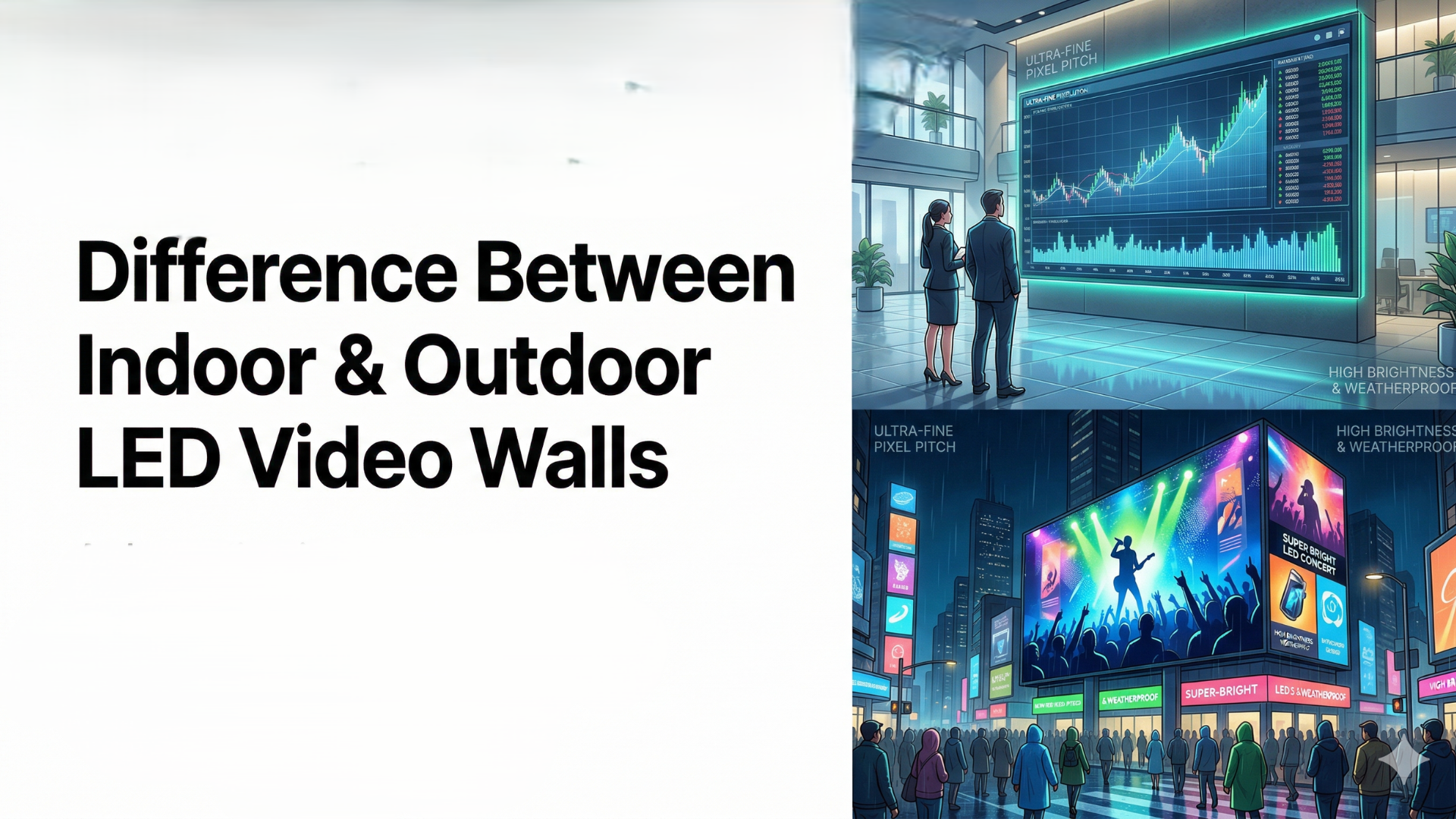
Investing in an Active LED video wall is a major decision for any business. Whether you are outfitting a corporate boardroom, a premium retail store, or setting up a massive digital billboard, choosing the right hardware is critical.
The environment where your screen will live dictates the technology you need. Using an indoor screen outside will lead to immediate hardware failure, while using an outdoor screen indoors will result in a poor viewing experience and wasted budget.
Outdoor LED Video Walls: These displays battle direct sunlight. To remain visible and vibrant on a sunny day, outdoor panels require an incredibly high brightness output, typically ranging from 5,000 to 10,000+ nits.
Indoor LED Video Walls: Indoor environments have controlled, ambient lighting. If you placed a 5,000-nit screen in a conference room, it would blind your audience. Indoor LED walls usually operate comfortably between 500 and 1,000 nits, ensuring a vivid but comfortable viewing experience.
Pixel pitch refers to the distance (in millimeters) from the center of one LED pixel to the center of the next. A smaller pixel pitch means higher resolution and closer optimal viewing distances.
Indoor Pixel Pitch: Audiences in corporate lobbies, control rooms, or retail stores are often just a few feet away from the screen. Therefore, indoor video walls require a fine pixel pitch—often between 0.9mm and 2.5mm. Industry leaders like Samsung, LG, and Deltaview heavily focus on sub-millimeter pitches for premium indoor commercial displays.
Outdoor Pixel Pitch: Outdoor digital signage, like highway billboards or stadium screens, is viewed from dozens or hundreds of feet away. Because human eyes blend the pixels at a distance, a tighter pixel pitch isn't necessary. Outdoor screens typically feature a pixel pitch of 4mm to 10mm (or higher), which keeps manufacturing costs down for large-scale deployments.
Ingress Protection (IP) ratings tell you how well a display is sealed against dust and moisture.
Outdoor IP Ratings: Outdoor video walls must survive rain, snow, dust storms, and extreme humidity. They require heavy-duty weatherproofing, usually starting at an IP65 rating (meaning they are dust-tight and protected against water jets from any angle). Some extreme-environment screens go up to IP68.
Indoor IP Ratings: Because they live in climate-controlled environments, indoor screens do not need robust weather seals. They typically have lower ratings, such as IP20 or IP31, protecting them against basic dust and accidental touches, but not water.
The physical construction of the LED cabinets varies drastically depending on the application.
Outdoor Hardware: Outdoor cabinets are built like tanks. They use ruggedized aluminum or steel, heavy-duty UV-resistant plastics, and advanced cooling systems (like robust fans or specialized heat sinks) to dissipate the massive heat generated by running at 10,000 nits in the summer sun.
Indoor Hardware: Indoor cabinets prioritize sleek aesthetics, lightweight design, and quiet operation. Because they generate less heat and aren't exposed to the elements, they are much slimmer and often rely on fanless, passive cooling systems to ensure zero noise distraction in quiet environments like boardrooms.
Where will it be installed? (Determines IP rating needs).
How far away is your audience? (Determines pixel pitch).
How bright is the ambient light? (Determines nit requirements).
If you are building a high-impact lobby display or a digital backdrop for presentations, a fine-pitch indoor Active LED wall is your solution. If you are aiming for architectural digital signage on the exterior of a building, a high-brightness outdoor LED wall is mandatory.
Understanding the differences between indoor and outdoor LED video walls—specifically regarding nits, pixel pitch, and IP ratings—is the first step to a successful AV installation. Choosing the correct hardware ensures maximum lifespan, incredible visual performance, and a strong return on your investment.
No. Even if an indoor LED screen is shielded from direct rain by a roof, it lacks the IP rating to handle outdoor humidity, condensation, and temperature fluctuations. It will also not be bright enough to compete with outdoor ambient light.
For an indoor conference room where viewers are relatively close (10-15 feet away), a pixel pitch of 1.2mm to 1.8mm is highly recommended to ensure crisp text and high-resolution video.
High-quality commercial Active LED displays generally have a lifespan of about 100,000 hours (roughly 10+ years of continuous use), provided they are used in the correct environment and properly maintained.
Yes. Because outdoor LED panels must push significantly higher brightness levels (nits) to remain visible in sunlight, they draw noticeably more power than their indoor counterparts.
Author Note: This article was written by the commercial AV experts at Elactree. We specialize in providing premium B2B digital signage, interactive displays, and tailored Active LED video wall solutions to help businesses elevate their visual communications.

 Interactive flat Panel
Interactive flat Panel
Interactive flat Panel
 Interactive flat Panel
 Interactive flat Panel