March 19, 2026 Manisha Maurya
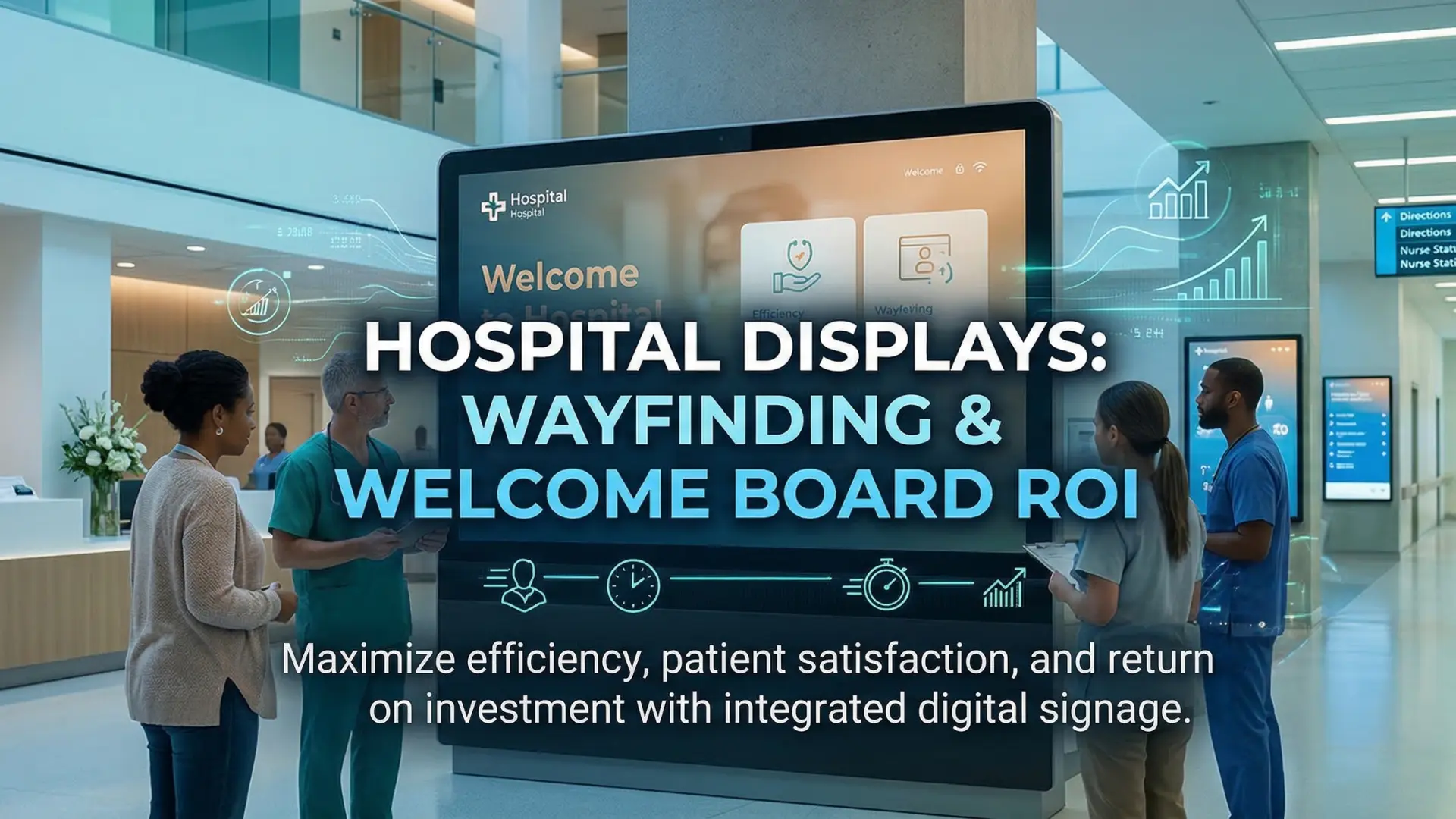
First impressions matter, especially in healthcare. When patients and their families enter a private hospital, they are often anxious and overwhelmed. Commercial displays, specifically digital welcome boards and interactive wayfinding kiosks, have transformed from luxury add-ons into operational necessities. Investing in high-quality visual technology not only modernizes the facility but delivers a measurable Return on Investment (ROI) by streamlining operations and improving patient satisfaction.
Private hospitals in fast-paced cities are sprawling, complex environments. A maze of corridors, specialized wings, and shifting clinic schedules can easily disorient visitors.
Printed signs become outdated the moment a doctor changes offices or a department relocates. They lack the dynamic capability to update in real-time, leading to confusion, late arrivals, and frustrated staff who must constantly act as makeshift tour guides.
When patients get lost, the entire hospital schedule suffers.
A delay of just ten minutes per patient due to navigation issues creates a compounding bottleneck, leading to costly idle time for expensive medical specialists and equipment.
The financial return of interactive panels and commercial TVs in a hospital setting extends far beyond a sleek aesthetic.
By implementing interactive wayfinding screens, hospitals drastically reduce the burden on front-desk receptionists and security personnel. Staff members can focus on patient care and administrative tasks rather than giving directions.
Clear, interactive map displays help patients find their destination quickly. Timely arrivals mean the hospital maximizes its daily consultation and procedure capacity, directly boosting revenue.
A bright, high-resolution welcome board does more than say "hello." It establishes authority and reassures patients that they are in a state-of-the-art facility. These screens can dynamically display clinic wait times, health advisories, doctor directories, and even promote premium health check-up packages.
Not all screens are built for the demanding 24/7 environment of a private hospital. Consumer-grade TVs will quickly burn out and fail under continuous use.
To achieve true ROI, hospitals must invest in commercial-grade interactive panels and digital signage. At Elactree, we provide access to the industry's most reliable technology as a premium authorized partner for leading brands. Whether it is the robust durability of a Samsung or LG commercial TV for the main lobby, or the precise, touch-responsive interactive panels from BenQ and Deltaview for self-service wayfinding kiosks, selecting the right hardware ensures years of uninterrupted service and crystal-clear visibility.
Most private hospitals begin to see operational ROI within 9 to 12 months. This is realized through reduced staff interruptions, fewer missed or late appointments, and increased uptake of promoted healthcare packages displayed on the screens.
Yes. Commercial displays come with intuitive Content Management Systems (CMS). Your administrative team can update doctor schedules, change floor maps, or push emergency alerts to all screens instantly from a central computer.
Commercial displays are engineered for 16/7 or 24/7 continuous operation, feature higher brightness levels to combat glare in well-lit lobbies, and include extended warranties. Consumer TVs are only built for a few hours of daily use and lack the necessary brightness and security features.
Absolutely. Advanced interactive panels can be linked to your hospital's backend systems, allowing patients to check in via a kiosk and instantly receive an animated, step-by-step map to their specific doctor's room.
Screen size depends on the viewing distance and the architectural layout of the lobby. Large video walls or 75-inch+ commercial TVs work best for high-traffic main entrances, while smaller, eye-level interactive panels (43 to 55 inches) are ideal for navigational kiosks at elevator banks.

 Interactive flat Panel
Interactive flat Panel
Interactive flat Panel
Interactive flat Panel
Interactive flat Panel
Interactive flat Panel
Interactive flat Panel