September 04, 2026 Manisha Maurya
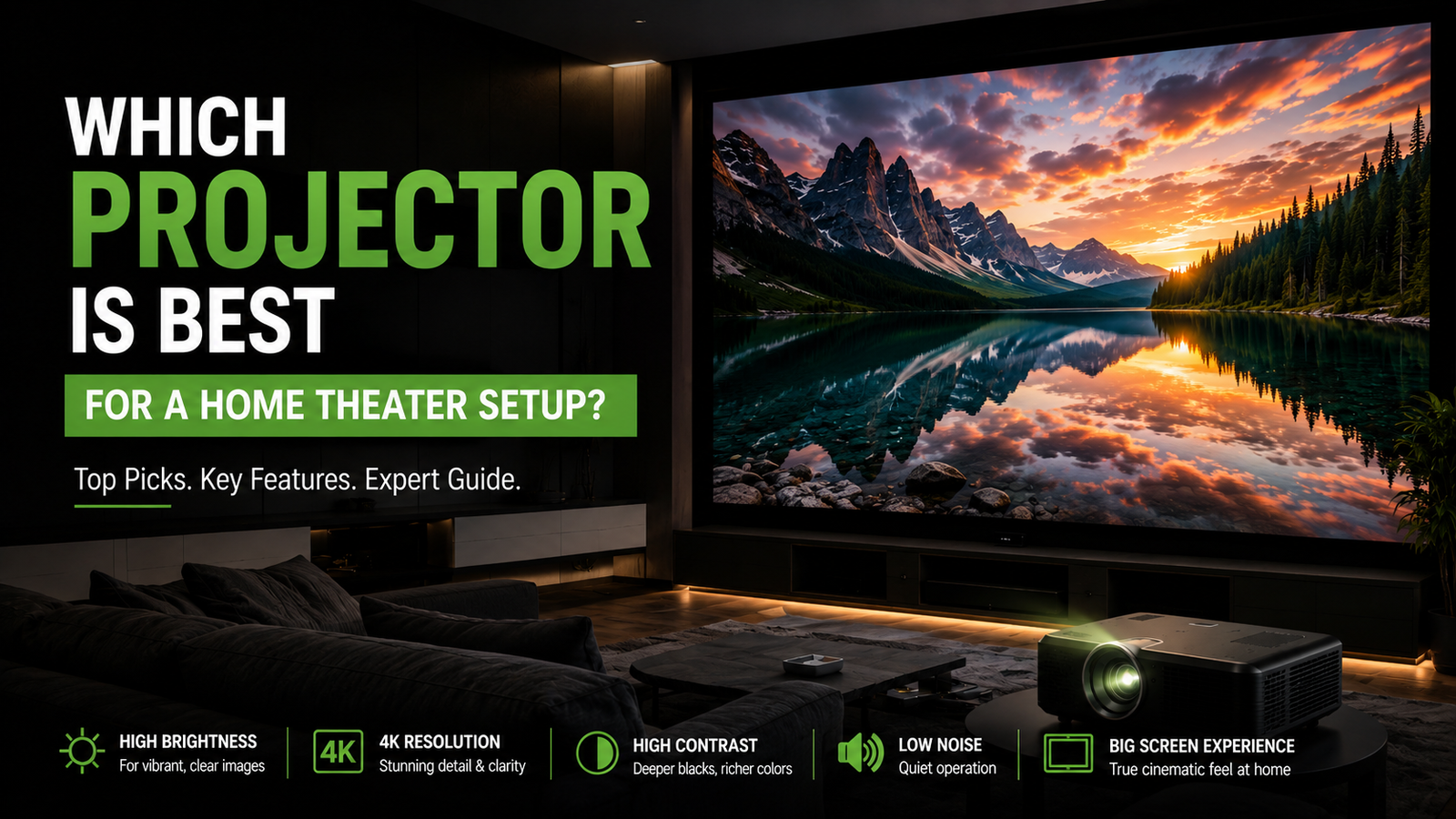
Setting up a private cinema at home often starts with a single calculation: getting a 100-inch or larger picture without spending television-panel money. However, stepping into the projector market quickly leads to confusion. Buyers encounter conflicting lumen claims, multiple projection technologies like DLP, 3LCD, and Laser, and a wide price spread ranging from ₹15,000 to over ₹5,00,000 in India.
Choosing the wrong unit usually results in washed-out daytime visuals, muddy shadow detail during dark movie scenes, or severe placement headaches caused by inadequate throw distance. A living room with white walls and sheer curtains requires a fundamentally different machine than a dedicated, light-controlled basement.
To find the right unit, you must match the projector’s optical engine, light source, throw ratio, and real brightness to the room it will live in.
For a light-controlled, dedicated room, a 4K pixel-shifting DLP or 3LCD projector (such as the BenQ TK or Epson EH-TW series) provides the best cinematic color, deep contrast, and sharp detail.
For an everyday living room with ambient light and space constraints, an Ultra Short Throw (UST) 4K Laser projector paired with an Ambient Light Rejecting (ALR) screen is the best choice. If you are on a strict budget under ₹30,000, a native Full HD LED projector with at least 500 ANSI lumens delivers a dependable entry-level cinema experience.
Projector Category | Best Suited For | Typical Brightness (ANSI) | Native / Display Resolution | Throw Distance for 100" | Typical India Price Range |
|---|---|---|---|---|---|
Budget Full HD (LED) | Bedrooms, dark rooms, beginners | 300 – 700 ANSI Lumens | 1080p Native | 8.5 to 11 feet (Standard) | ₹15,000 – ₹45,000 |
Mid-Range 4K (Lamp / LED / Laser) | Dedicated home cinemas, media rooms | 2,000 – 3,200 ANSI Lumens | 4K UHD (via XPR / Pixel-Shift) | 8.0 to 12 feet (Standard) | ₹1,00,000 – ₹2,60,000 |
Ultra Short Throw (Laser TV) | Living rooms with moderate ambient light | 2,200 – 3,500 ANSI Lumens | 4K UHD | 8 to 15 inches (Inches from wall) | ₹2,50,000 – ₹4,80,000 |
High-End Reference Cinema | Dedicated luxury theaters, dark rooms | 1,800 – 3,000 Lumens | Native 4K (D-ILA / SXRD) | 10 to 18 feet (Optical Zoom) | ₹5,00,000 – ₹12,00,000+ |
A dedicated home theater projector is an optical display device engineered specifically for video content, narrative films, and high-definition gaming. Unlike office projectors, which prioritize harsh brightness to show static spreadsheets under fluorescent lights, a home theater model focuses on color accuracy, dynamic contrast ratio, black levels, and frame pacing.
These machines use standard cinema color gamuts such as Rec. 709 or DCI-P3. They feature specialized video-processing chips that handle motion smoothing, HDR10 tone mapping, and low-latency input signals.
Are 4K Projectors and Native 4K Projectors the Same?
No, they are not mechanically identical, though both can display a 3840x2160 image.
Native 4K Projectors: These units contain an imaging panel (found in Sony SXRD or JVC D-ILA systems) with 8.3 million distinct physical pixels. Every pixel on screen corresponds to an individual pixel on the internal silicon chip. This technology produces unmatched optical sharpness and contrast, but the complex panel manufacturing pushes prices into the luxury bracket (typically ₹5,00,000 and above).
Pixel-Shifting 4K Projectors: Most consumer 4K models from brands like BenQ, Optoma, ViewSonic, and Epson use pixel-shifting technology. In DLP projectors, a 1080p or 0.47-inch DMD chip flashes four distinct micro-frames per second at high frequency to project 8.3 million individual pixels on the wall. To human vision, the image appears indistinguishable from native 4K at typical viewing distances, at a fraction of the hardware cost.

In Indian homes, living rooms typically feature large windows, light tile flooring, and reflective paint finishes. Uncontrolled ambient light ruins projector contrast because projectors cannot "project black"; they can only project light, relying on the surface darkness for black levels.
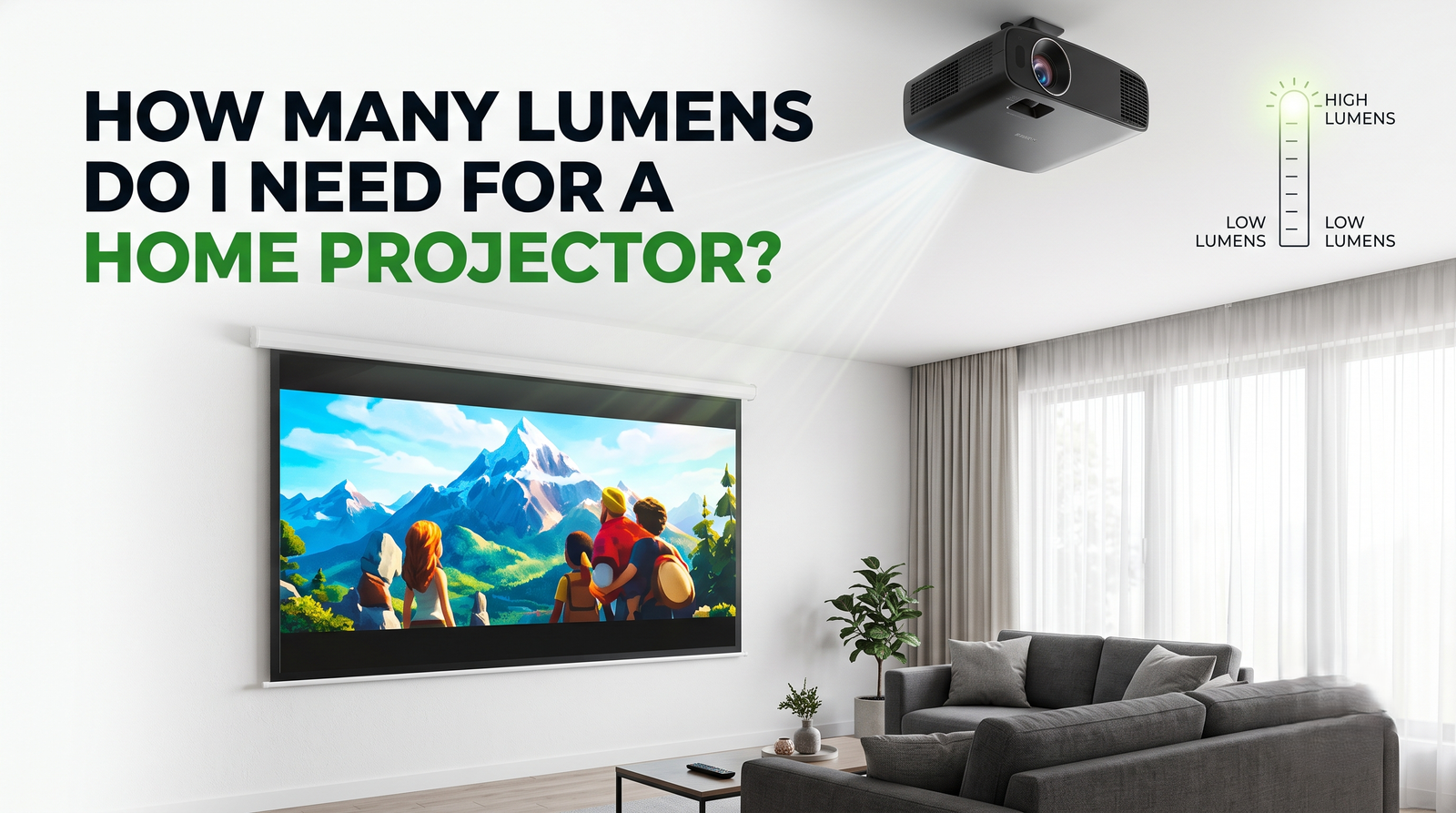
Avoid generic marketing terms such as LED Lumens or 9000 Lux/Source Lumens. Look strictly for ANSI Lumens or ISO Lumens:
1,500 – 2,200 ANSI Lumens: Suitable only for pitch-dark, dedicated rooms with blackout curtains.
2,500 – 3,500 ANSI Lumens: Necessary for a projector for living room environments with moderate, indirect daytime lighting.
Throw ratio determines how far back the lens must sit from the screen to produce a specific image size:
Standard Throw (1.2:1 to 1.5:1): Requires around 9 to 11 feet of distance to project a 100-inch image. This is standard for ceiling mounts in mid-sized rooms.
Short Throw (0.6:1 to 0.9:1): Projects a 100-inch image from 4 to 6 feet away. Useful for compact bedrooms.
Ultra Short Throw (UST - 0.2:1 to 0.25:1): Sits directly beneath the wall on a media console, projecting a 100-inch image from merely 8 to 14 inches away.
The imaging engine dictates contrast performance, maintenance schedules, and color fidelity:
DLP (Digital Light Processing): Uses tiny micro-mirrors on a chip. Delivers razor-sharp motion, high pixel density, and zero panel-alignment issues. A small percentage of viewers are sensitive to the "rainbow effect" (color flashes caused by single-chip color wheels).
3LCD: Splits light into red, green, and blue beams. It produces equal white and color brightness, meaning rich, saturated colors with zero rainbow artifacts. Contrast ratios are solid, though black levels on entry-tier 3LCD chips can tilt toward dark gray.
Laser vs. Traditional Lamp: Traditional UHP lamps last roughly 3,000 to 5,000 hours and lose brightness over time, requiring replacement bulbs. Solid-state Laser and 4LED light sources last 20,000 to 30,000 hours, turn on almost instantly, run cooler, and maintain stable color profiles over years of regular use.
A Full HD projector for home theater setups remains practical if your screen size stays under 100 inches and your seating distance is greater than 10 feet. At that range, 1080p provides a clean image without visible pixel grid lines. It also costs significantly less.
A 4K projector for home theater installations is necessary when:
1. You are projecting 100 inches or larger.
2. Your seating position is relatively close to the wall (within 8 to 11 feet).
3. You stream modern 4K HDR mastering from services like Apple TV+, Netflix, or Prime Video, or play modern gaming consoles.

A modern smart projector for home cinema includes integrated operating systems like Google TV or Android TV, along with onboard Wi-Fi and Bluetooth.
While built-in streaming apps add convenience, they have limitations:
For a true theater setup, treat the projector strictly as a visual monitor. Run a dedicated streaming player (like an Apple TV 4K or Fire TV Stick 4K) into an AV Receiver or eARC-compatible soundbar system for uncompressed audio decoding.
Projector pricing in India reflects import duties, optical grades, and warranty structures:
Entry-Level (₹15,000 – ₹45,000): Basic single-LCD or portable LED projectors. Offers 1080p resolution and low light output (200–500 ANSI lumens). Suitable only for pitch-black rooms and small screens.
Mid-Tier Performance (₹80,000 – ₹1,80,000): High-output Full HD and entry 4K pixel-shifters from brands like BenQ, Epson, and ViewSonic. Reliable lenses, 2,500+ ANSI lumens, low input lag, and accurate Rec. 709 color.
Premium Living Room / UST (₹2,20,000 – ₹4,50,000): 4K Laser Ultra Short Throw models and high-end long-throw laser projectors. Features high light output, DCI-P3 wide color gamuts, and long lamp life.
High-End Custom Cinema (₹5,00,000 – ₹15,00,000+): Native 4K JVC D-ILA and Sony SXRD units. Designed for custom light-controlled screening rooms, delivering industry-reference black levels and dynamic iris controls.
Note: Always account for the projection screen (₹15,000 to ₹1,20,000) and installation mounting/cabling in your total budget.
Before ordering equipment, review these physical variables:
Dust Protection: India's climate carries high airborne dust loads. Ensure the projector features a sealed optical engine (IP5X or IP6X rated) to prevent dust spots from settling onto the internal chip.
Power Conditioning: Voltage drops and surges damage projector power supplies and ballast lamps. Always pair the unit with a dedicated online UPS or stabilizer to allow the cooling fan to complete its shutdown cycle during sudden outages.
Lens Shift vs. Keystone: Keystone correction digitally compresses pixels to square an off-center image, reducing native picture resolution. Prioritize physical lens shift (vertical and horizontal), which moves the lens element mechanically without degrading the image.
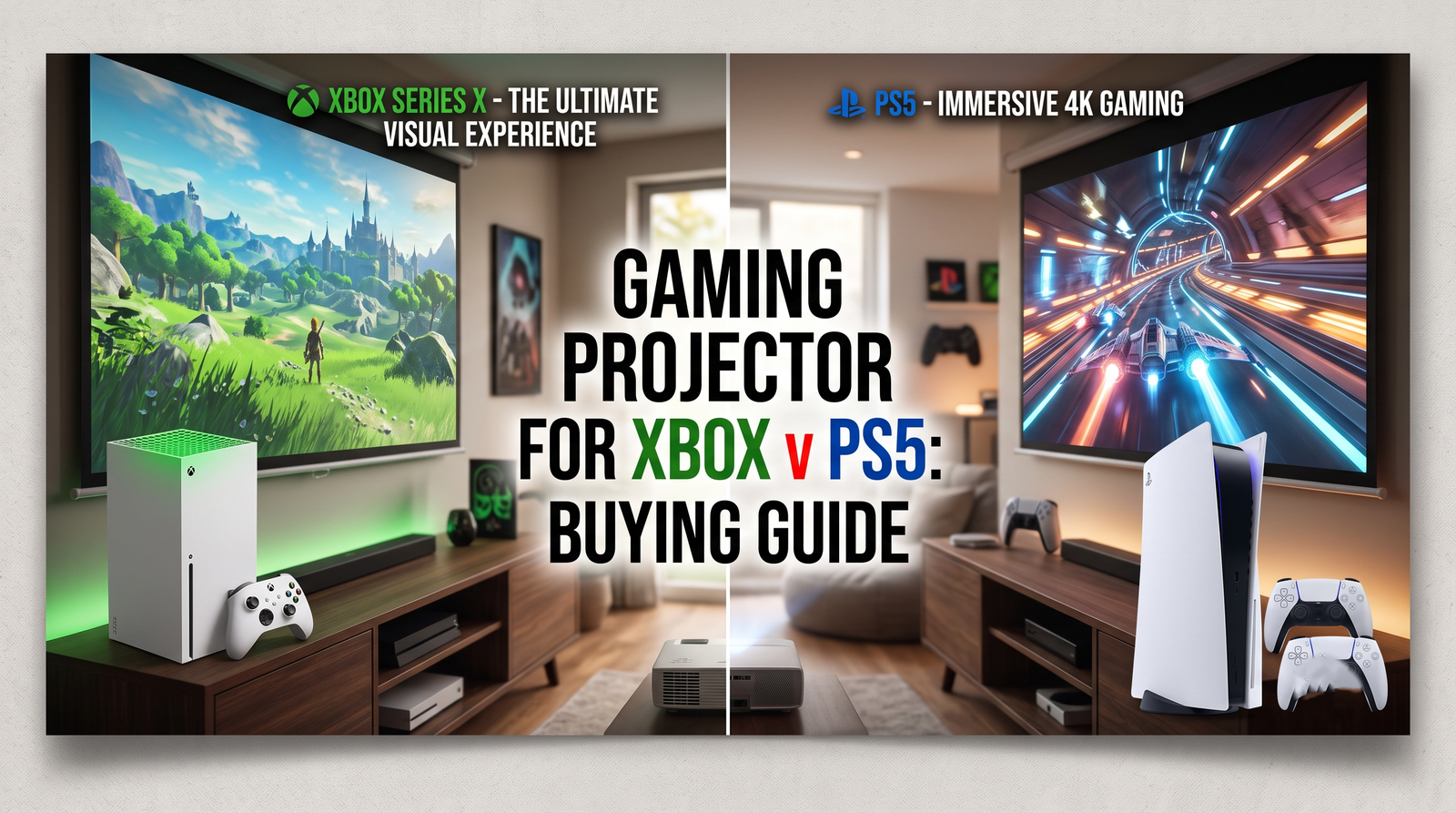
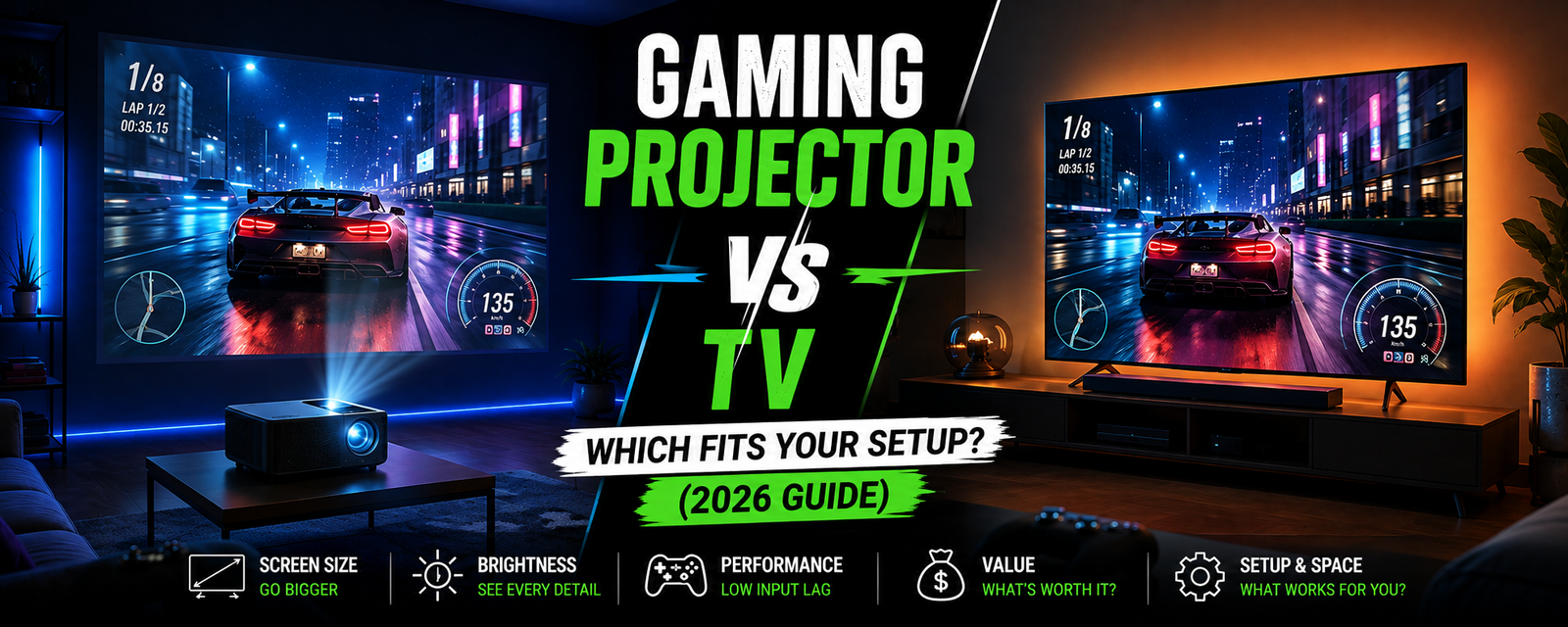
HDMI 2.0 vs. HDMI 2.1: If you plan to connect a PlayStation 5 or Xbox Series X, ensure the projector supports high-refresh-rate 1080p/240Hz or 4K/60Hz–120Hz with eARC audio return.
Screen Pairing: Never project onto a bare wall if you want high contrast. For living rooms, budget for an ALR (Ambient Light Rejecting) screen; for dark home theaters, use a fixed-frame matte white screen with 1.0 to 1.2 gain.
Immersive Scale: Delivers screen sizes between 100 and 150 inches at a cost per inch far below commercial LED televisions.
Reflected Light Comfort: Projectors bounce light off a surface rather than blasting it directly into the viewer's eyes, reducing eye fatigue during long viewing sessions.
Aesthetic Integration: A motorized ceiling screen or compact UST console disappears into the room decor far more neatly than a massive 98-inch black panel.
Ambient Light Degradation: Washes out quickly without dark curtains or specialized ALR screen materials.
Audio Requirements: Internal speakers are basic; an external speaker system or AV receiver is practically mandatory.
Installation Complexity: Involves ceiling drops, long in-wall HDMI routing, and throw distance calculations.
If you are building a dedicated home cinema room where you can control every ray of light, choose a standard-throw 4K pixel-shifting projector (such as an Epson 3LCD or BenQ DLP unit). Paired with a standard matte-white screen, it delivers the most natural film reproduction and contrast for your investment.
If you are outfitting a typical Indian living room that handles mixed daytime use, sports, and casual evening viewing, choose an Ultra Short Throw 4K Laser projector paired with a ceiling-light-rejecting (CLR/ALR) screen. It eliminates ceiling wiring, replaces the family television, and keeps the picture clear even when ambient room light is present.
Yes, provided you choose an Ultra Short Throw (UST) laser projector paired with an Ambient Light Rejecting (ALR) screen. Traditional lamp projectors take time to warm up and degrade in bright ambient light, making them less practical for quick daily television use.
In rooms with ambient light or white walls, an ALR screen is essential. White walls reflect projector light back onto the screen, graying out black levels. An ALR screen rejects off-axis ambient room light while reflecting projector light directly toward your seating position.
Traditional high-pressure mercury lamps last between 3,000 and 5,000 hours (about 3 to 4 years of typical movie watching) before needing replacement. Modern LED and Laser projectors last between 20,000 and 30,000 hours, which covers over a decade of heavy daily use without maintenance.
For a 100-inch screen, the optimal cinematic viewing distance is between 9 and 12 feet. This achieves a roughly 36 to 40-degree field of view, which matches standard SMPTE cinema guidelines for immersion without causing neck fatigue.
Yes, as long as the projector includes an HDMI ARC or eARC port, or an optical digital output. The HDMI ARC/eARC port sends high-bandwidth audio from your connected streaming stick or console back down to your soundbar through a single cable.
Most modern home theater projectors produce between 24 and 32 decibels of fan noise in standard eco-modes, which is quieter than a whisper. However, if run in high-altitude or maximum-brightness HDR modes, fan speed increases, making proper placement away from the primary seating position important.
Digital keystone correction changes the shape of the image by switching off display pixels digitally, which reduces sharpness and can cause subtle jagged artifacts. It is always better to position the projector correctly using mechanical lens shift or physical mounting adjustments.
To stream native 4K HDR content smoothly without buffering on services like Netflix, Disney+ Hotstar, or Prime Video, you need a stable internet connection with download speeds of at least 25 to 50 Mbps.

 Interactive flat Panel
Interactive flat Panel
Interactive flat Panel
 Interactive flat Panel
 Interactive flat Panel
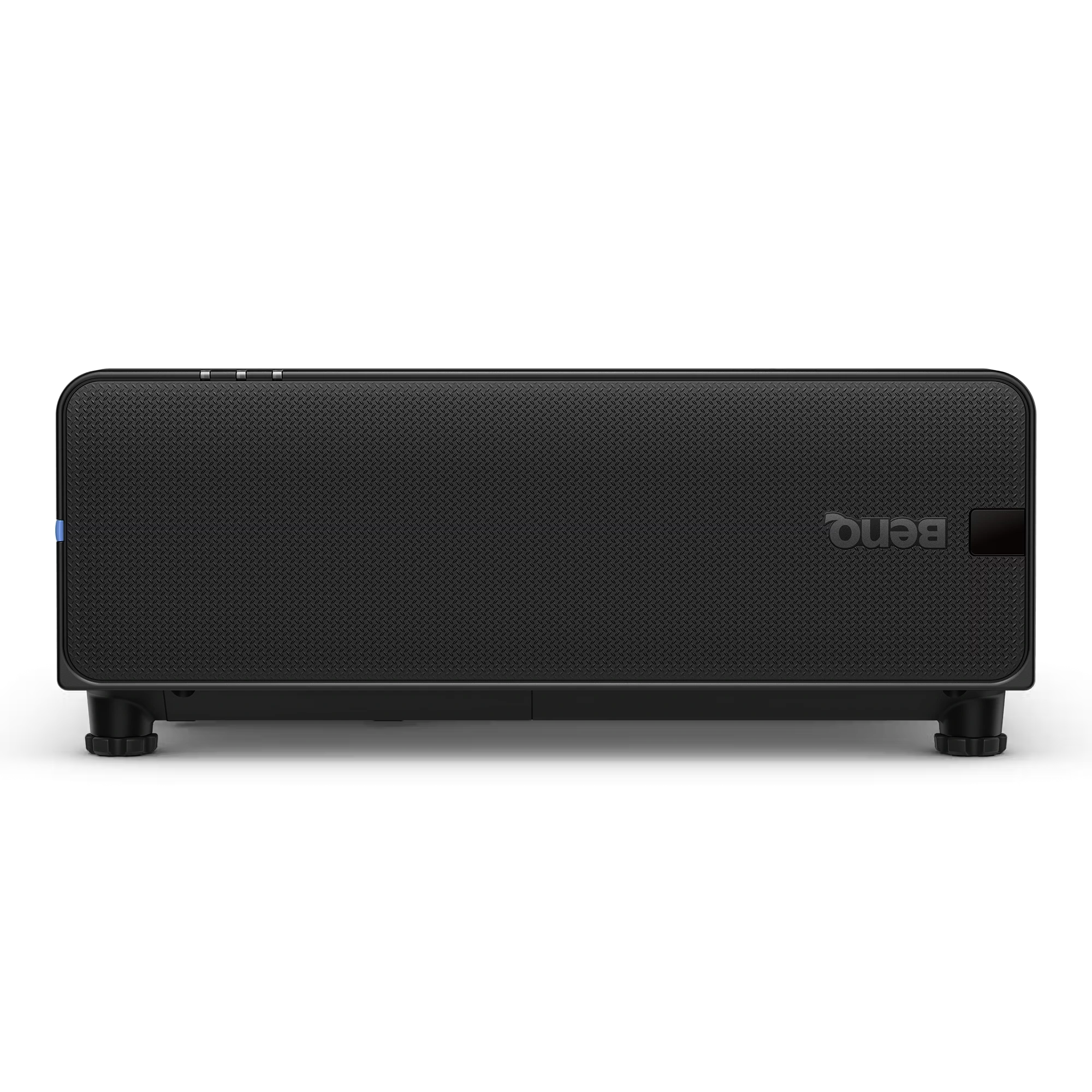
The BenQ LU895UST is a professional 5000 ANSI Lumen WUXGA laser simulation projector designed for immersive environments, museums, simulation centers,...
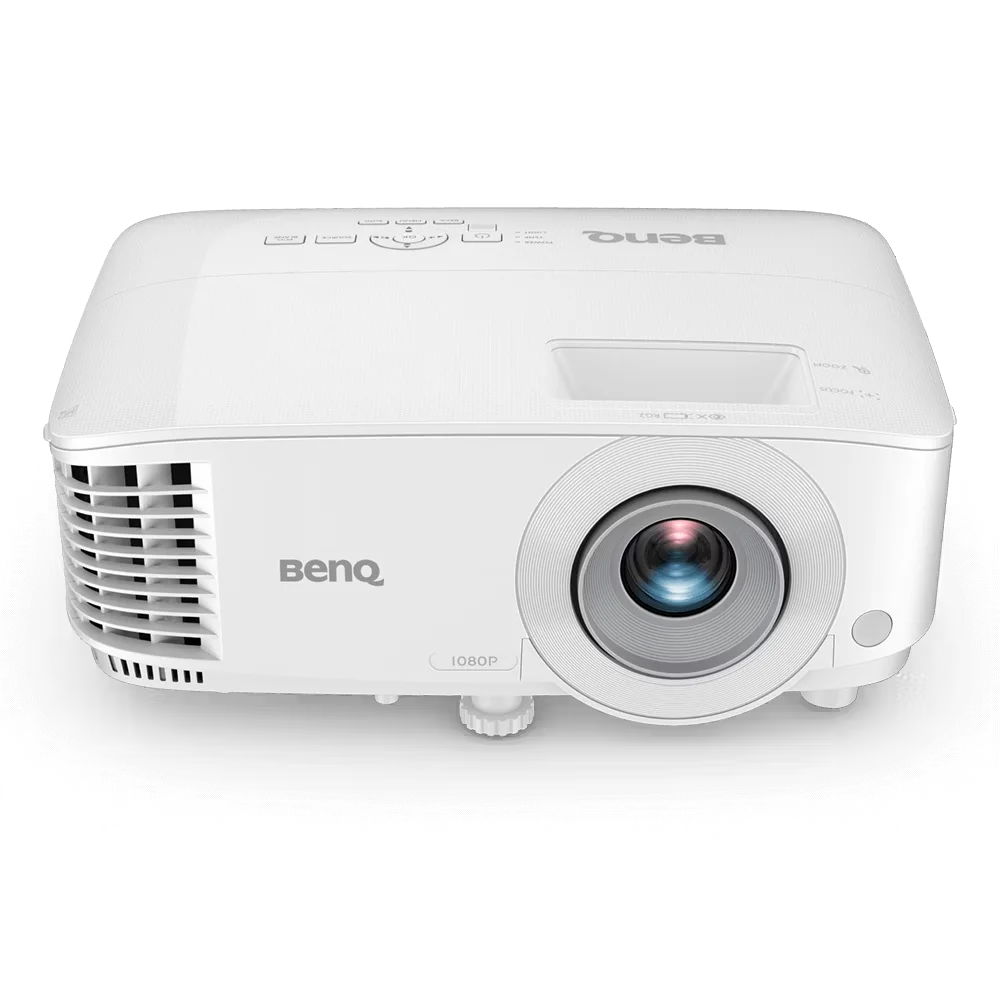
The BenQ MH560 is a Full HD 1080p business projector designed for meeting rooms, conference spaces, and classrooms. It delivers...
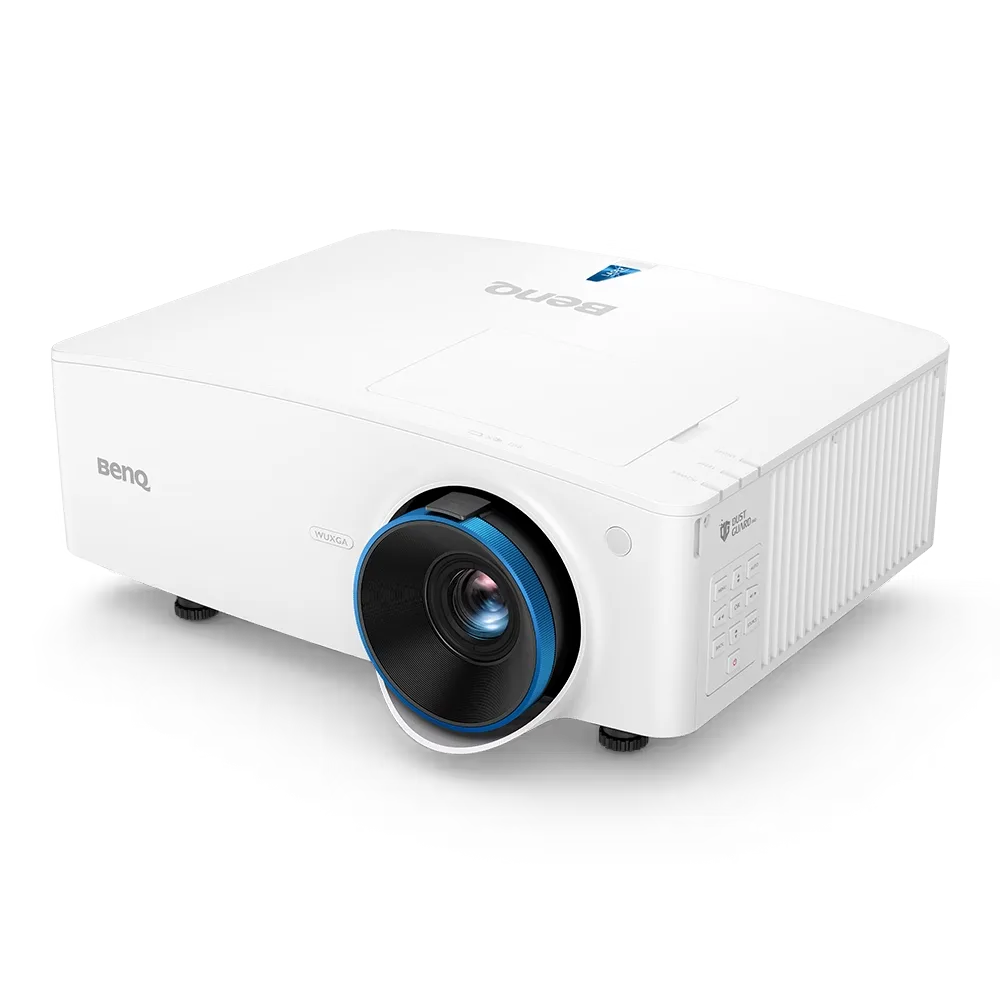
The BenQ LU935 is a professional-grade 6000 ANSI Lumens WUXGA laser projector designed for conference rooms, boardrooms, higher education, and...
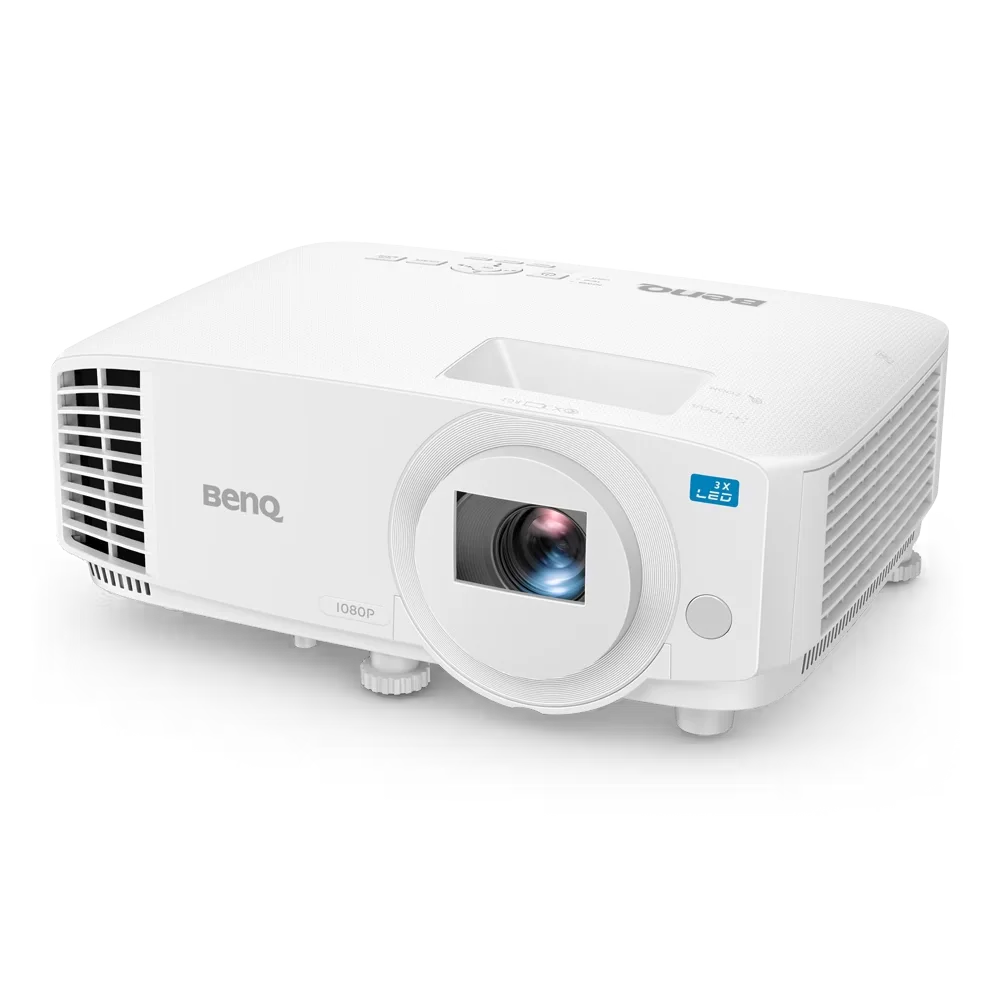
The BenQ LH500 is a Full HD LED meeting room projector designed for professional presentations and collaborative workspaces. It delivers...