April 01, 2026 Manisha Maurya
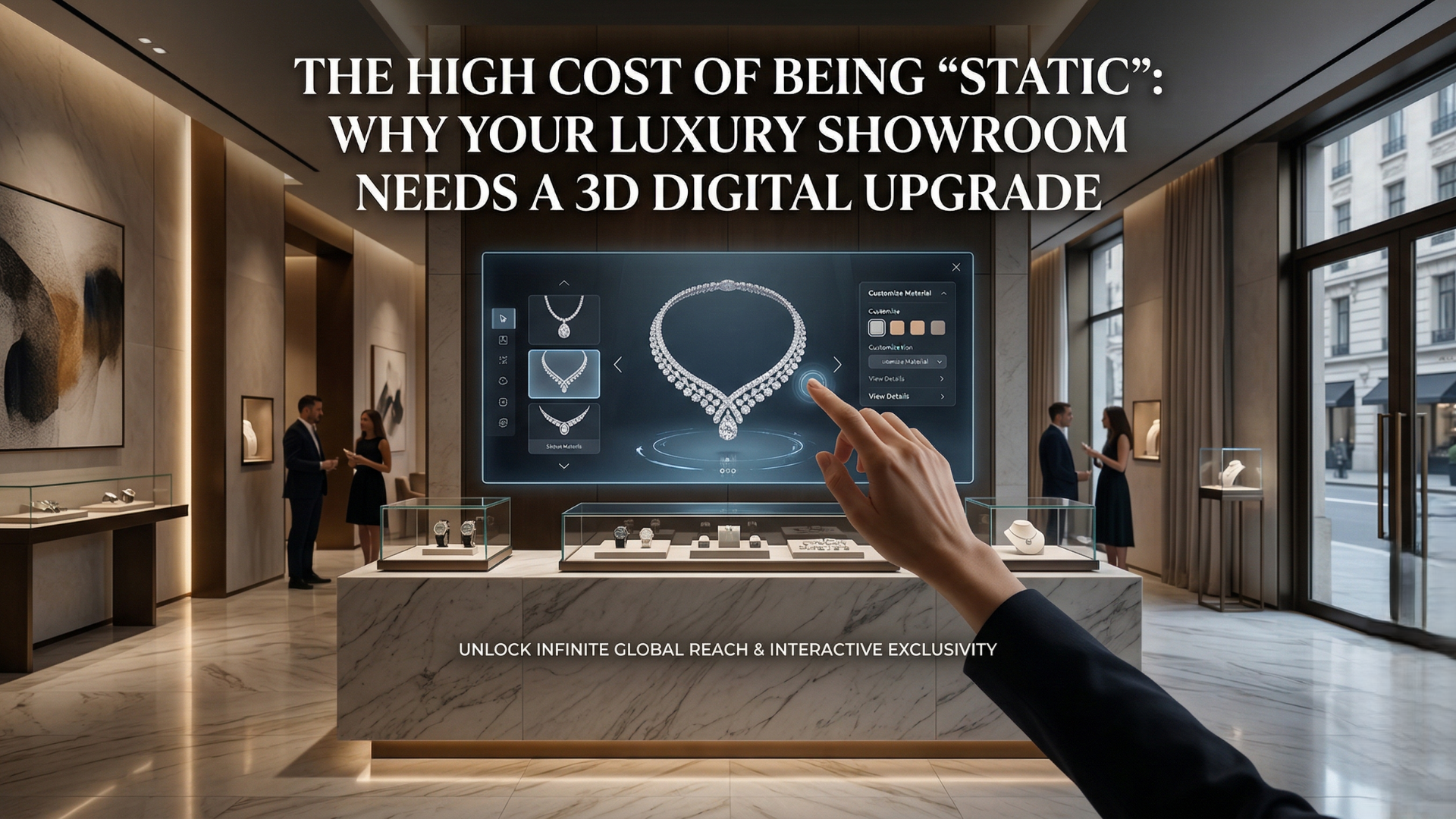
For decades, the luxury retail experience relied on a simple formula: a beautiful physical showroom, impeccable white-glove service, and exclusive physical inventory.
But consumer expectations have shifted. Today's high-net-worth buyers demand convenience alongside exclusivity. If your luxury brand still relies solely on a traditional, static showroom, you aren't just missing out on digital foot traffic—you are actively losing revenue.
Here is a breakdown of why static physical spaces are holding your brand back, and why a 3D digital showroom upgrade is the most profitable investment you can make this year.
A physical showroom is beautiful, but it comes with severe limitations. Maintaining a purely physical presence incurs hidden costs that eat into your profit margins.
Geographical Boundaries: Your physical store only serves the people who can travel to it. High-net-worth individuals are global; if your showroom is only in Milan, you are ignoring buyers in Tokyo, New York, and Dubai.
Inventory Limitations: Floor space is expensive. You can only display a fraction of your catalogue. If a client wants to see a luxury sofa in navy velvet but you only have the grey linen on the floor, you risk losing the sale.
High Overhead: Rent, utilities, staffing, and physical maintenance for luxury retail spaces are exorbitant.
Zero Off-Hours Engagement: When your store closes at 7:00 PM, your sales engine stops entirely.
A luxury virtual showroom is a photorealistic, interactive digital replica or reimagining of a retail space.
Instead of looking at flat 2D images on a standard website, customers navigate a 3D environment. They can walk around products, zoom in on intricate textures (like the stitching on a leather bag or the grain of a wooden table), and configure custom options in real-time.
It provides the emotional connection of a physical visit with the limitless capabilities of digital commerce.
Transitioning to an interactive 3D showroom is no longer a futuristic gimmick. It is a core business strategy. Here is why:
A 3D digital showroom is open 24/7/365 to anyone with an internet connection. You instantly expand your market from local foot traffic to a global audience of affluent buyers, allowing them to experience your brand at their convenience.
Say goodbye to floor space limits. In a digital showroom, a client can change the color, material, and size of a product with a single click. A 3D product configurator lets buyers visualize every possible variation of a product instantly.
In a physical store, it is difficult to track exactly what catches a customer's eye. In a 3D digital showroom, every interaction is a data point. You can track:
Which products users zoom in on most.
The most popular custom configurations.
How long users spend in specific areas of the showroom.
This data is invaluable for future product development and marketing.
Luxury is about being extraordinary. Offering a highly polished, immersive 3D retail experience positions your brand as a forward-thinking market leader. It signals to your clients that you are willing to invest in their convenience and experience.
High-ticket items require high buyer confidence. When customers can view a luxury watch from every angle or use Augmented Reality (AR) to place a 3D model of a designer chair in their own living room, their confidence skyrockets. This leads to higher conversion rates and drastically lower return rates.
The world's most recognizable brands have already recognized the cost of being static.
Automotive: Luxury car brands allow users to virtually sit inside a car, change the leather upholstery, and walk around the vehicle in stunning 3D.
Real Estate: High-end developers use 3D virtual tours to sell multi-million dollar penthouses before the foundation is even poured.
Fashion & Jewelry: Haute couture houses use digital showrooms to allow VIP clients to view exclusive collections and zoom in on diamond cuts and fabric weaves from their tablets.
Upgrading your digital showroom strategy is easier than you might think.
Define Your Goal: Are you looking to showcase a specific new collection, or do you want to digitize your entire flagship store?
Partner with 3D Experts: Find an agency that specializes in high-fidelity 3D rendering for luxury brands. Quality matters; a low-resolution digital room will harm your luxury brand.
Integrate with E-Commerce: Ensure your 3D showroom connects directly to your checkout system. The goal is not just to entertain, but to sell.
Promote the Experience: Treat the launch of your digital showroom like a physical store opening. Invite VIPs, send out press releases, and feature it prominently on your homepage.
Conclusion: Don't Let Your Showroom Stand Still
The luxury market is evolving rapidly. Relying solely on a static physical space means leaving money on the table, limiting your global reach, and falling behind more innovative competitors.
A 3D digital showroom upgrade transforms your retail strategy. It offers your clients an immersive, personalized, and highly engaging way to connect with your products—anytime, anywhere.
The cost varies based on the size of the virtual space, the number of 3D products, and the level of interactivity required. However, the ROI of a digital space often eclipses the ongoing overhead costs of maintaining a physical showroom.
No. A 3D showroom complements your physical space. It acts as an omnichannel bridge, allowing global customers to browse virtually and local customers to pre-shop before coming in for a physical consultation.
Not necessarily. While VR integration is a great feature, the most accessible 3D showrooms are WebGL-based, meaning they run smoothly on standard web browsers, smartphones, and tablets without any extra hardware.


 Interactive flat Panel
Interactive flat Panel
Interactive flat Panel
 Interactive flat Panel
 Interactive flat Panel