March 07, 2026 Manisha Maurya
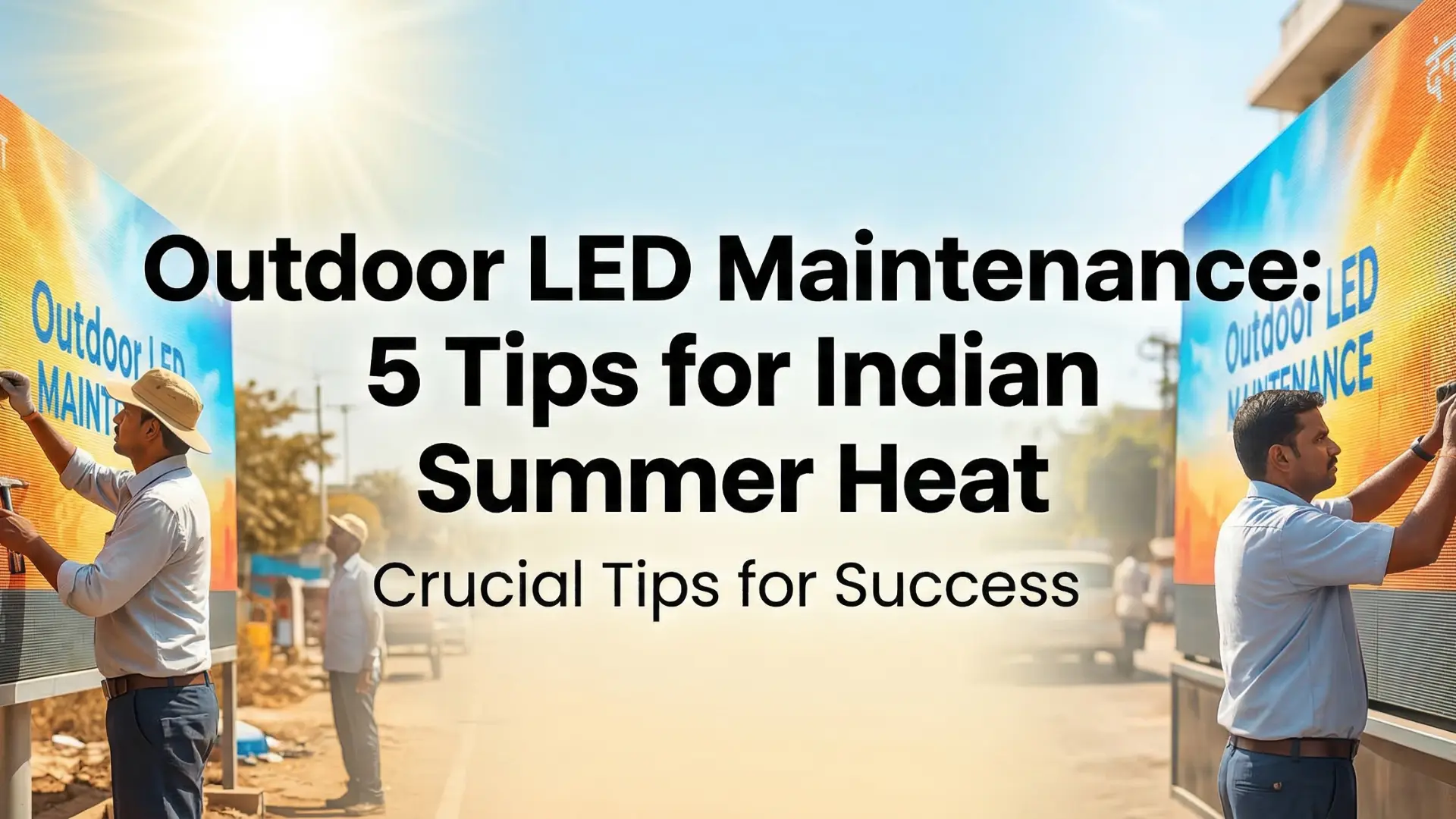
In India, summer isn't just a season; it’s an endurance test for technology. With temperatures frequently soaring above 40°C (104°F), outdoor LED displays face significant risks. Excessive heat can lead to color degradation, pixel failure, and even total system meltdowns.
If you own or manage digital billboards or outdoor displays, proactive maintenance is the only way to safeguard your investment. Here are five essential tips to keep your LED screens running cool during the peak of the Indian summer.
The most common cause of LED failure in summer is internal heat buildup. Because LED modules generate their own heat, high ambient temperatures make it difficult for the hardware to cool down naturally.
Check Exhaust Fans: Ensure all built-in fans are operational and rotating at the correct RPM.
Airflow Clearance: Ensure there is at least a few inches of space between the screen and the wall/structure for proper air circulation.
Consider External Cooling: For south-facing screens that catch the afternoon sun, installing an industrial-grade air conditioning unit or a specialized heat exchanger within the enclosure may be necessary.
Running an LED screen at 100% brightness during the hottest part of the day increases power consumption and heat generation.
Using a light sensor to automatically adjust brightness based on ambient light can significantly reduce the thermal load. During the day, the screen needs to be bright to combat sunlight, but as the sun sets, the brightness should drop. Reducing brightness by even 10-20% can lower the internal temperature by several degrees.
The Indian summer is often accompanied by dust storms and "Loo" winds. Dust acts as an insulator, trapping heat inside the cabinet and clogging the ventilation filters.
| Component | Cleaning Frequency (Summer) | Method |
| Air Filters | Bi-weekly | Vacuum or compressed air |
| LED Modules | Monthly | Soft brush or specialized LED cleaner |
| Ventilation Vents | Weekly | Clear any debris or bird nests |
Heat causes materials to expand, which can lead to loose connections. Furthermore, high temperatures increase the electrical resistance in wires, which can cause power supplies to work harder and run hotter.
Tighten Connections: Periodically check for loose cables or scorched connectors.
Voltage Regulation: Use a high-quality voltage stabilizer. In many parts of India, summer brings power fluctuations that can be just as damaging as the heat itself.
While DIY checks are great, a professional technician can perform "health checks" that go beyond the surface.
Thermal Imaging: Technicians use infrared cameras to find "hot spots" on the screen that indicate failing components before they actually break.
Calibration: Summer sun can cause uneven aging of LEDs. Professional calibration ensures the colors remain uniform across the entire display.
Outdoor LED screens are significant investments. By implementing these maintenance steps, you not only prevent downtime but also extend the lifespan of your display by several years.
Most high-quality outdoor LED screens are rated to operate up to 50°C to 55°C. However, performance begins to degrade once the internal temperature exceeds 40°C, making cooling systems essential.
No. Never spray water directly on an LED screen to cool it. While many outdoor screens are IP65 rated (water-resistant), thermal shock (rapidly cooling hot glass/plastic with cold water) can cause components to crack or seals to fail.
Common signs include "ghosting" images, flickering, individual modules turning black, or the screen automatically dimming or shutting down as a safety precaution.
Yes. The hot, dusty winds common in North India can clog air filters much faster than usual. During these months, you should double your cleaning frequency.
Not necessarily. If your screen has high-quality fans and is positioned in a way that allows for natural shade or high airflow, you might not need an AC. However, for large-scale billboards in cities like Delhi or Ahmedabad, an AC cabinet is highly recommended.

 Interactive flat Panel
Interactive flat Panel
Interactive flat Panel
 Interactive flat Panel
 Interactive flat Panel