April 23, 2026 Manisha Maurya
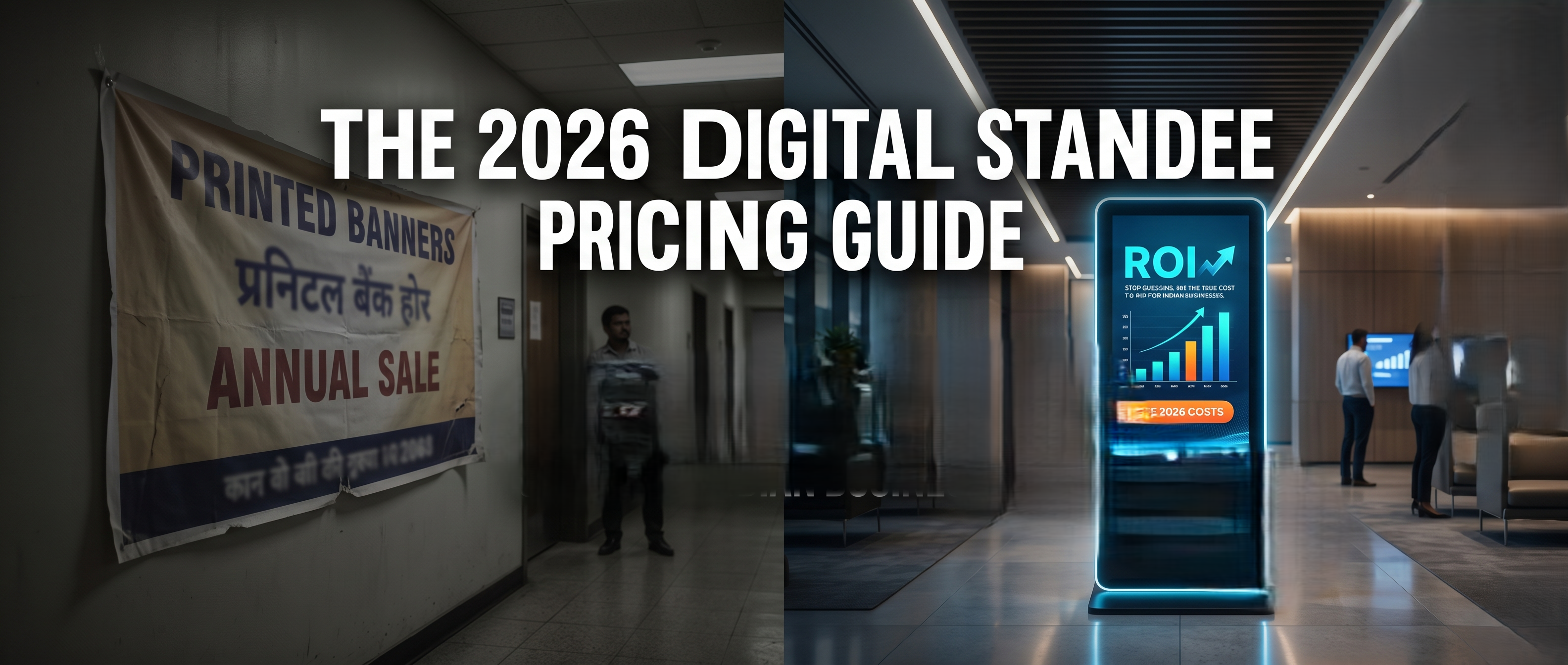
Are you still wasting money on printed banners that end up in the trash? In 2026, upgrading to a digital standee isn't just a visual upgrade; it's a measurable revenue driver. Let’s break down exactly what you should pay in India—and how to avoid overpaying for unnecessary display features.
Introduction: The Shift from Static to Smart Signage
Core Features: What Makes a Commercial Digital Standee?
Business Benefits: Why the ROI Justifies the Investment
2026 Pricing & Specification Comparison Table
Hidden Costs: Installation, CMS, and Maintenance
How to Choose the Right Standee for Your Location
Conclusion & Next Steps
Frequently Asked Questions (FAQs)
The commercial landscape across India—from the bustling corporate parks of Mumbai and Noida to emerging education and retail hubs like Kanpur and Nashik—is evolving rapidly. Buyers today have higher expectations, and static paper banners simply do not capture high-intent foot traffic anymore.
A commercial digital standee is a centralized, dynamic lead-generation tool. It allows you to run targeted campaigns, schedule content dynamically, and present an undeniable professional image. But before investing, it's crucial to look past the generic commodity descriptions and understand the exact technical architecture that justifies the price.
Not all screens are created equal. Placing a consumer-grade television sideways in a metal box is a recipe for hardware failure. A true commercial digital standee is built for 24/7 continuous operation.
Here are the technical specifications you must evaluate:
Peak Brightness (Nits): An indoor retail environment typically requires 350 to 450 nits. If your standee faces a glass storefront with heavy sunlight, you need a high-brightness panel pushing 700 to 1,000 nits to prevent screen washout. Outdoor displays require 2,500+ nits.
Touch Capabilities: Basic models are non-touch (ideal for passive advertising).
Pixel Pitch & Refresh Rates: For indoor standees where viewers are just a few feet away, a tighter pixel pitch (e.g., P2 or P2.5) and high refresh rates (1920Hz to 3840Hz) ensure crisp, flicker-free text and video.
Operating System & CMS: Look for built-in Android or Windows operating systems integrated with a robust Content Management System (CMS) via Wi-Fi or LAN. This allows you to update pricing, promotions, and videos instantly from a single dashboard.
Shifting to interactive flat panels or digital kiosks is a strategic move to optimize your marketing spend.
Dynamic Ad Scheduling: Display high-energy promotional videos during peak foot-traffic hours and switch to detailed, specification-heavy digital brochures during slower, consultation-heavy periods.
Zero Recurring Print Costs: Eliminate the constant cycle of designing, printing, shipping, and setting up traditional flex banners.
Enhanced Lead Generation: Interactive standees can feature direct QR codes, allowing you to capture high-intent customer data and push them directly into your CRM or Google Merchant Center campaigns.
Centralized Control: If you operate multiple branches, a cloud-based CMS ensures absolute brand consistency across all locations simultaneously.
Pricing for digital standees in India varies significantly based on size, interactivity, and panel quality. Below is an accurate 2026 breakdown to help you map your investment against your business needs.
| Tier | Estimated Price Range (INR) | Typical Screen Size | Interactivity | Ideal Use Case |
| Basic (Entry-Level) | ₹25,000 – ₹45,000 | 32" to 43" | Non-Touch | Small retail, hospital waiting rooms, basic directional signage. |
| Advanced (Interactive) | ₹55,000 – ₹85,000 | 43" to 55" | IR / Capacitive Touch | Dealerships, commercial real estate lobbies, interactive product catalogs. |
| Premium (High-Nits / Outdoor) | ₹95,000 – ₹1,50,000+ | 55" to 65"+ | Non-Touch / Touch | Outdoor events, heavy-glare storefronts, self-service commercial kiosks. |
Note: Prices are estimated averages and exclude 18% GST and specific software licensing fees.
To accurately calculate your ROI, factor in the total cost of ownership. Avoid low-quality imports that lack service warranties, as downtime directly equates to lost revenue.
Content Management Systems (CMS): While basic USB plug-and-play is free, a cloud-based CMS software for remote management usually requires an annual subscription fee per screen.
Installation & Logistics: Digital standees are heavy and contain fragile components. Ensure your supplier provides secure shipping and professional installation, especially for wall-mounted or heavy floor-standing units.
Maintenance: Dust and heat are the enemies of electronic hardware. Ensure your unit has proper ventilation, commercial-grade cooling fans, and a solid warranty (at least 1 to 3 years) covering the motherboard and LED backlight.
Investing in a digital standee is a strategic upgrade that elevates your brand presentation and drives targeted customer engagement. Whether you are outfitting a high-end showroom in Hyderabad or targeting rising commercial belts in Tier-2 cities, choosing the right combination of screen size, brightness, and operating software is key to maximizing your return.
Ready to digitize your commercial space? Explore our full range of smart commercial displays to find the exact hardware built for your industry.
What is the starting price of a digital standee in India?
The starting price of a basic non-touch digital standee in India is typically between ₹25,000 to ₹45,000.
Do digital standees require an active internet connection?
Digital standees do not always require a continuous internet connection. You can use USB drives for offline plug-and-play. However, an active Wi-Fi or Ethernet connection is essential for managing content remotely and syncing schedules across multiple locations via a Content Management System (CMS).
What is the lifespan of a commercial digital standee?
A high-quality commercial digital standee typically has a lifespan of 50,000 to 60,000 continuous hours. This equates to nearly six to seven years of 24/7 operation. Regular maintenance, proper ventilation, and using commercial-grade panels can further extend the display's functional longevity.
Can I use an indoor digital standee outdoors?
No, you should never use an indoor digital standee outdoors. Outdoor environments require specialized displays with high brightness (over 2,500 nits) to combat glare, alongside IP65-rated weatherproof enclosures to protect the internal electronics from water, extreme heat, and severe dust infiltration.
About the Author:
The Elactree Team specializes in B2B audiovisual technology, interactive flat panels, and commercial smart displays. We are dedicated to providing data-driven hardware solutions and authoritative insights that help Indian businesses scale their operations and enhance customer engagement.

 Buying guides
 Buying guides
 Buying guides