October 07, 2025 Manisha Maurya
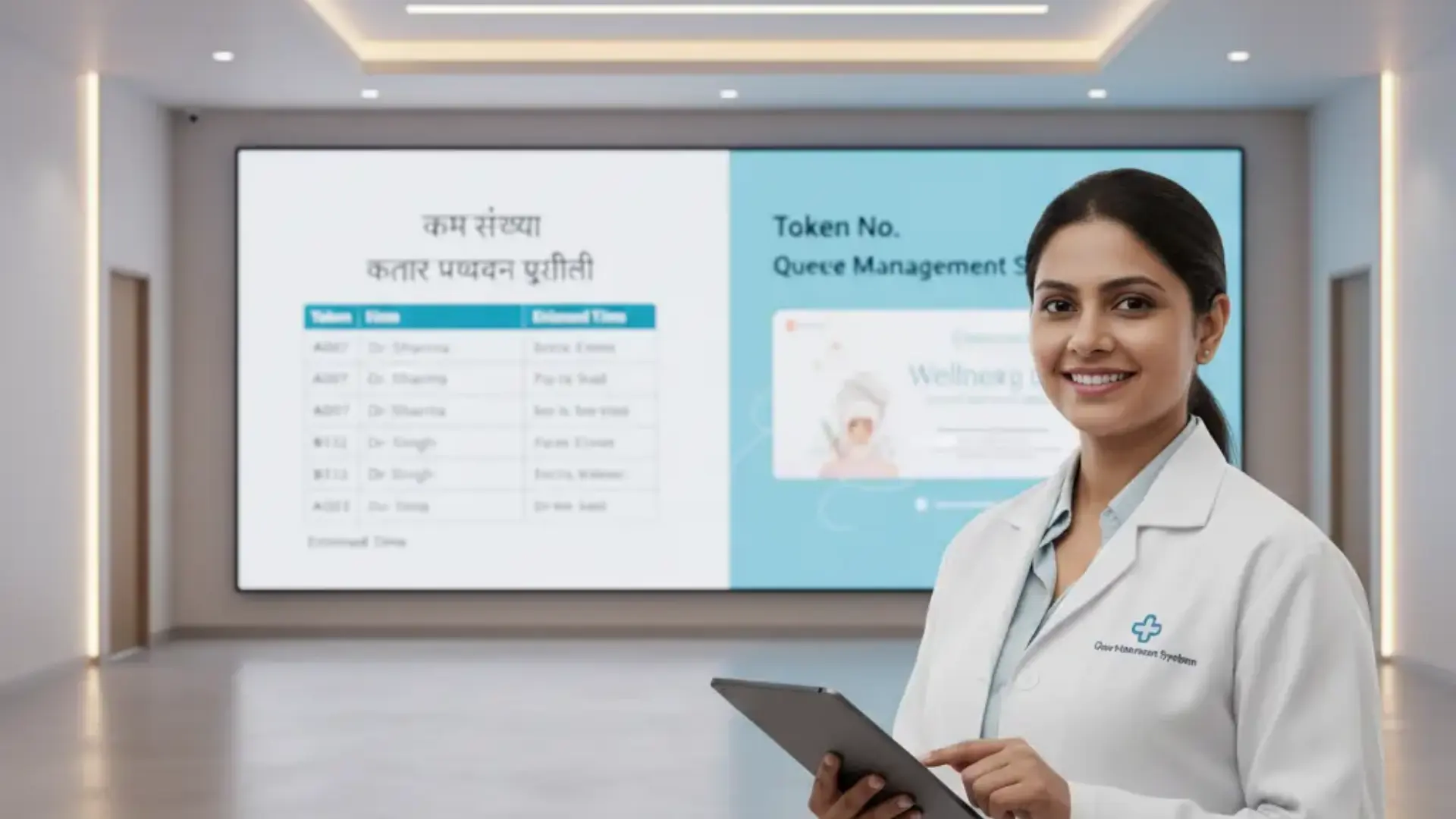
The healthcare sector in India is undergoing a rapid digital transformation. As private hospitals and clinics compete to provide a world-class patient experience, the adoption of technology like digital signage systems is becoming a key differentiator. From managing patient queues in bustling OPDs to providing clear wayfinding in multi-specialty hospitals, these systems are proving their worth. However, for many hospital administrators, the primary question remains: what is the true cost to set up a digital signage system in a hospital in the Indian market?
The answer is complex and depends on a variety of factors, from the scale of the deployment to the specific technology chosen. This guide provides a comprehensive breakdown of the typical costs involved, offering actionable insights and realistic price points relevant to the Indian healthcare landscape. We’ll look at the hardware, software, installation, and content creation expenses to help you budget effectively for this crucial investment.
The cost of a digital signage system in India can be broken down into four main components. Here, we provide an overview with estimated price ranges based on the current market.
In the Indian market, hardware is often the most significant part of the initial investment. Prices can vary widely based on the manufacturer, brand, and supplier.
Commercial-Grade Displays: Unlike consumer televisions, commercial displays are built to operate for 24 hours a day, 7 days a week, and have features like remote management.
Small to Medium (32" - 55"): A standard commercial-grade LCD or LED display for waiting rooms, corridors, or patient rooms can cost anywhere from ₹15,000 to ₹80,000 per unit. Factors like screen brightness (measured in nits) and brand reputation (e.g., Samsung, LG, Philips) influence the price.
Large-Format Displays & Video Walls: For impressive lobby installations, a large-format LED video wall is often the choice. The cost is calculated per square foot. A high-resolution indoor LED screen (P2.5-P4 pixel pitch) can range from ₹4,500 to ₹12,000 per square foot. A complete 3x3 video wall could easily cost upwards of ₹5 Lakhs to ₹10 Lakhs or more, including the controller and mounting.
Interactive Kiosks: These all-in-one units are a popular choice for wayfinding and patient check-in. The price for a floor-standing or wall-mounted interactive kiosk typically starts from ₹45,000 and can go up to ₹2,00,000 or more, depending on screen size, features like cameras or printers, and the body material.
Media Players: These are the small computers that power the displays. The cost can range from a basic Android player starting at around ₹2,000 to a more robust, industrial-grade player for complex video walls, costing ₹15,000 or higher.
Mounts and Enclosures: The cost of mounting hardware and protective enclosures can be a few hundred to a few thousand rupees per display, ensuring a secure and professional installation.
The Content Management System (CMS) is the software that allows you to control and manage all your displays from a central location. This is often a recurring expense.
Subscription-Based CMS: This is the most common model in India. Prices are typically quoted per screen, per month or year. You can find providers offering plans from as low as ₹500 to ₹1,500 per screen, per month. The price is influenced by the features offered, such as real-time data integration, advanced scheduling, and reporting analytics. Some providers also offer a perpetual license for a one-time fee, which can be a better option for a long-term deployment.
Custom Integration: For hospitals that need the digital signage system to communicate with their existing Hospital Information System (HIS) or Patient Management System, custom software development can be a significant cost. This can range from ₹50,000 to several lakhs, depending on the complexity of the integration.
This is a crucial but often overlooked cost. Professional installation ensures the system is set up correctly and safely.
Installation Fees: The labor cost for installing a standard display in a hospital can range from ₹2,000 to ₹5,000 per unit, depending on the complexity. For a large video wall, the installation can be a multi-day project and a professional team would charge based on the project scope, which can run into lakhs.
Training and Support: Many providers offer initial training for staff on how to use the CMS. Ongoing technical support and maintenance packages are also available, which can be an annual fee or a part of the CMS subscription.
While some CMS platforms offer free templates, creating compelling, professional-grade content is essential for a hospital's brand image.
In-House Team: The cost here is part of your payroll if you have an in-house graphic designer or content creator.
Outsourced Content: Hiring a freelance graphic designer or a specialized agency in India can cost anywhere from ₹5,000 to ₹50,000 for a single campaign or a set of videos, depending on the complexity and quality required.
To make these numbers more tangible, let's look at two hypothetical scenarios in the Indian context:
Scenario A: Small Clinic (3-5 Displays)
Hardware: 4 commercial-grade 43" displays at ₹35,000 each (₹1,40,000 total).
Software: CMS subscription at ₹1,000/month per screen (₹4,000/month).
Installation: Basic installation for 4 screens at ₹3,000 each (₹12,000 total).
Total Initial Cost: Approx. ₹1.5 Lakhs.
Total Annual Recurring Cost: Approx. ₹48,000.
Scenario B: Large Multi-Specialty Hospital (50+ Displays)
Hardware: 1 large video wall in the lobby (₹8 Lakhs), 40 standard displays in waiting areas and corridors (₹30,000 each = ₹12 Lakhs), and 5 interactive kiosks (₹60,000 each = ₹3 Lakhs). Total Hardware: ₹23 Lakhs.
Software: Enterprise CMS subscription at ₹800/month per screen for 50 screens (₹40,000/month).
Installation: Professional installation and wiring for all displays, estimated at ₹4 Lakhs.
Total Initial Cost: Approx. ₹27 Lakhs.
Total Annual Recurring Cost: Approx. ₹4.8 Lakhs.
Despite the costs, digital signage offers a significant return on investment for Indian hospitals and clinics.
Enhanced Patient Experience: In a highly competitive market, patient satisfaction is paramount. Clear wayfinding, reduced wait-time anxiety, and engaging health content all contribute to a better patient experience, leading to positive word-of-mouth and a strong brand reputation.
Operational Efficiency: Digital signage frees up front-desk staff to focus on critical tasks, reducing the number of queries and streamlining patient flow, a major challenge in crowded Indian hospitals.
Revenue Generation: A hospital can use its digital screens to display ads for its own specialized departments, wellness packages, or even rent out ad space to healthcare-related brands like diagnostic labs or pharmacies.
Modern Image: A tech-savvy hospital is perceived as more reliable and advanced, building trust with patients and their families. This is a crucial factor in attracting patients in a market where technology is often equated with quality of care.
Q1: What is the most cost-effective way to start with digital signage in a small clinic in India?
A: The most cost-effective way is to start with a few standard commercial-grade displays (around 43 inches) and a cloud-based, subscription-model CMS. This minimizes the initial capital expenditure and allows you to test the system's effectiveness before scaling up. Using a CMS with pre-loaded templates for content can also save on content creation costs.
Q2: Is it better to buy or rent digital signage hardware in India?
A: For a long-term solution, buying is generally more cost-effective. However, renting can be a great option for short-term events like a health camp or a medical conference. Some providers offer a rental-to-own model, which can be a good way to test the technology before committing to a full purchase.
Q3: How can a hospital in India reduce its ongoing digital signage costs?
A: To reduce ongoing costs, a hospital can opt for a CMS with a lower annual fee, negotiate a bulk discount for a large number of screens, and train an in-house team to manage content. Using power-saving modes on the displays and opting for energy-efficient screens can also lower electricity bills in the long run.
Q4: What is the typical ROI period for a digital signage investment in an Indian hospital?
A: The ROI period is difficult to pinpoint exactly, as many benefits (like patient satisfaction) are not purely monetary. However, with improved operational efficiency, reduced paperwork, and potential revenue from advertising, many hospitals find that the system pays for itself within 2-3 years, especially when they account for the long-term benefits to brand image and patient loyalty.
Q5: Are there Indian government grants or incentives for hospitals adopting digital technology?
A: While there aren't specific, widespread grants for digital signage systems, the Indian government has several initiatives to promote digitalization in healthcare. Hospitals can explore various schemes and tax benefits related to technology investments, especially for projects that improve public health infrastructure and patient communication, under programs like Ayushman Bharat Digital Mission (ABDM).
For Indian healthcare providers, the decision to invest in a digital signage system is a strategic move towards a more efficient, patient-centric, and technologically advanced future. While the initial costs require careful planning, the long-term benefits in terms of enhanced patient experience, improved operational flow, and a stronger brand image make it a worthwhile and necessary investment. By understanding the local market dynamics and exploring the various hardware, software, and service options, hospitals and clinics in India can implement a system that not only meets their budget but also sets a new standard for patient care.
Ready to get a detailed quote for your hospital? Contact us for a customized consultation tailored to your specific needs and take the first step towards a smarter, more connected healthcare facility.

 Buying guides
 Buying guides
 Buying guides
BenQ SL6504 is a 65-inch professional 4K UHD digital signage display featuring 500 nits brightness, IPS panel technology, Android 13,...
BenQ SL7504 is a 75-inch 4K UHD professional digital signage display with 500 nits brightness, Android 13, 24/7 operation, anti-glare...
The BenQ SL8604 is an 86-inch 4K UHD professional digital signage display featuring 500 nits brightness, an IPS panel, Android...
Samsung OM55N 55 Inch Semi Outdoor Digital Signage features 4,000-nit brightness, Full HD resolution, wide 178° viewing angles, and a...