February 28, 2026 Manisha Maurya
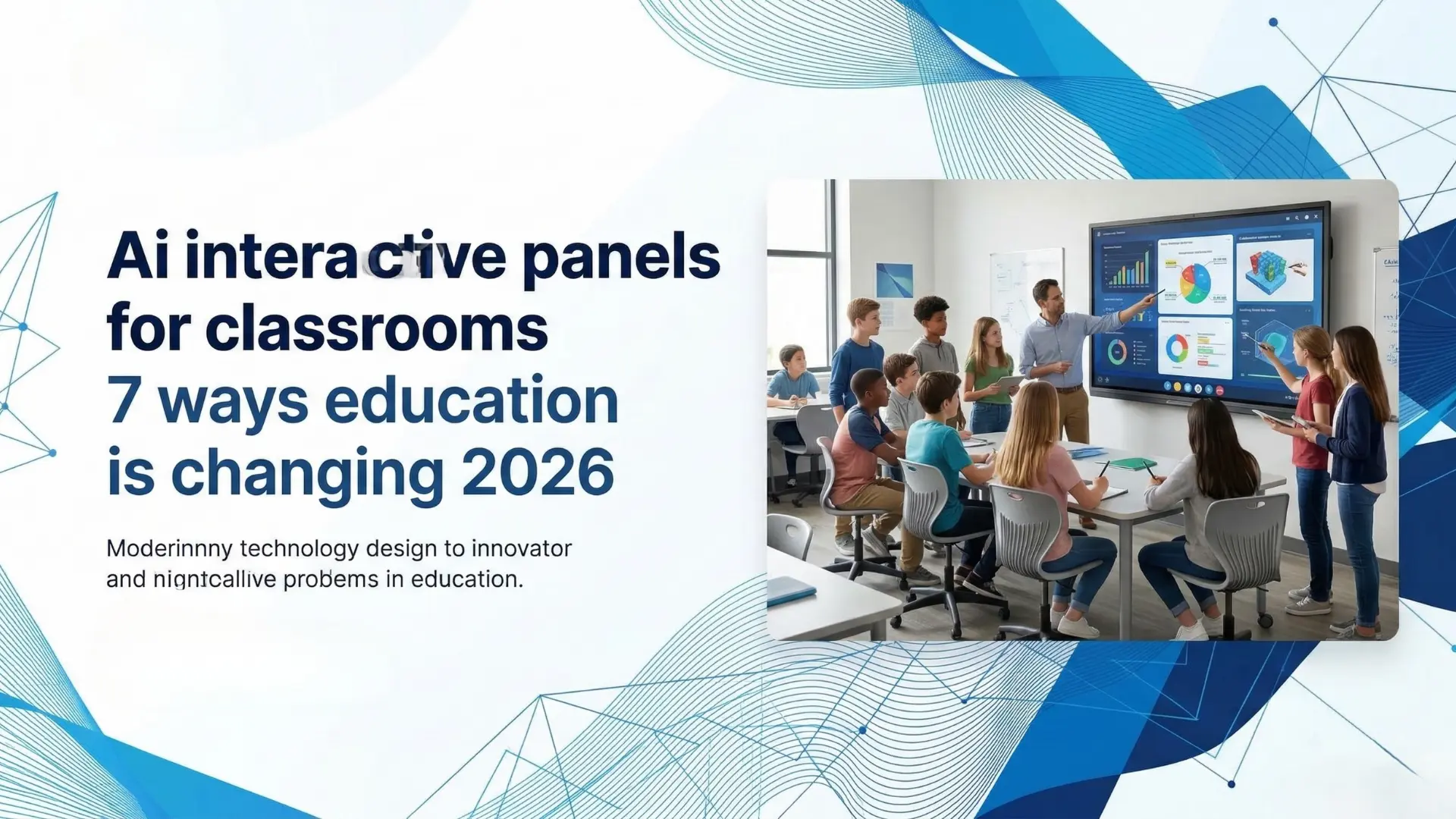
The traditional classroom is undergoing a profound transformation. In 2026, the once-static whiteboard has evolved into a dynamic, AI-powered interactive panel, fundamentally changing how teachers teach and students learn. These advanced tools are no longer just display screens; they are active participants in the educational journey, fostering engagement, personalization, and collaboration like never before.
1. Personalized Learning at Scale
One of the most significant impacts of AI-powered panels is their ability to facilitate personalized learning. AI algorithms can analyze student interactions in real-time, identifying areas where individual students are struggling and providing tailored support. This might include suggesting additional resources, adjusting the difficulty of interactive exercises, or offering alternative explanations based on a student's learning style.
2. Real-Time Engagement and Feedback
AI-powered panels enable instant feedback, which is crucial for effective learning. During a lesson, teachers can conduct live polls, quizzes, and interactive activities. The AI can then immediately aggregate and analyze the results, giving the teacher a clear picture of the class's understanding. This allows for immediate course correction and ensures that no student is left behind.
3. Immersive and Interactive Content
Gone are the days of passive learning from textbooks. AI-powered panels bring lessons to life with immersive and interactive content. Students can explore virtual 3D models, conduct simulated science experiments, and interact with historical figures through AI-driven avatars. This hands-on approach makes learning more engaging and helps students grasp complex concepts more easily.
4. Seamless Collaboration and Communication
AI-powered panels are designed to foster collaboration. Multiple students can work on the panel simultaneously, brainstorming ideas, solving problems, and creating projects together. Furthermore, these panels often integrate seamlessly with other classroom devices and platforms, allowing for easy sharing of content and communication between students and teachers, both in-person and remotely.
5. AI-Assisted Lesson Planning and Delivery
For teachers, AI-powered panels are a powerful ally. AI assistants can help with lesson planning by suggesting relevant content, creating interactive activities, and even generating assessments. During delivery, the AI can provide real-time prompts, translations, and additional information, allowing teachers to focus more on facilitating learning and providing individual support.
6. Data-Driven Insights for Educators
The wealth of data collected by AI-powered panels provides educators with invaluable insights into student progress and engagement. Detailed analytics dashboards can track individual and class-wide performance over time, helping teachers identify trends, predict potential challenges, and develop more effective instructional strategies.
7. Greater Inclusivity and Accessibility
AI-powered panels are also making classrooms more inclusive and accessible for all students. Features like real-time captioning, language translation, and text-to-speech capabilities ensure that students with different needs and backgrounds can fully participate in the learning process. Additionally, AI can adapt content to suit various accessibility requirements, making education more equitable.
1. What makes an AI-powered interactive panel different from a regular smart board?
A regular smart board is essentially a large touch screen that displays content from a connected device. An AI-powered interactive panel, on the other side, has built-in AI capabilities that allow it to actively participate in the learning process. This includes real-time data analysis, personalized learning support, and AI-assisted content generation.
2. Are AI-powered panels difficult for teachers to learn and use?
Most AI-powered panels are designed with user-friendliness in mind. While there may be a slight learning curve, many manufacturers provide comprehensive training and support. Additionally, the AI assistants built into the panels are specifically designed to simplify tasks like lesson planning and delivery.
3. How do AI-powered panels ensure data privacy and security?
Data privacy and security are top priorities for EdTech manufacturers. AI-powered panels typically employ robust security measures, such as data encryption and secure user authentication, to protect student and teacher information. It's also important for schools to have clear policies and procedures in place regarding data usage.
4. Can AI-powered panels be used for remote or hybrid learning?
Yes, AI-powered panels are excellent tools for remote and hybrid learning. They often integrate with popular video conferencing platforms and allow for real-time collaboration between in-person and remote students. Teachers can also easily share their screen and interactive content with students regardless of their location.
5. What is the typical cost of an AI-powered interactive panel?
The cost of an AI-powered interactive panel varies depending on the brand, size, and specific features. While they can be a significant investment, many schools find that the long-term benefits in terms of improved student outcomes and teacher efficiency make them a worthwhile expenditure.



 Interactive flat Panel
Interactive flat Panel
Interactive flat Panel
 Interactive flat Panel
 Interactive flat Panel