April 02, 2026 Manisha Maurya
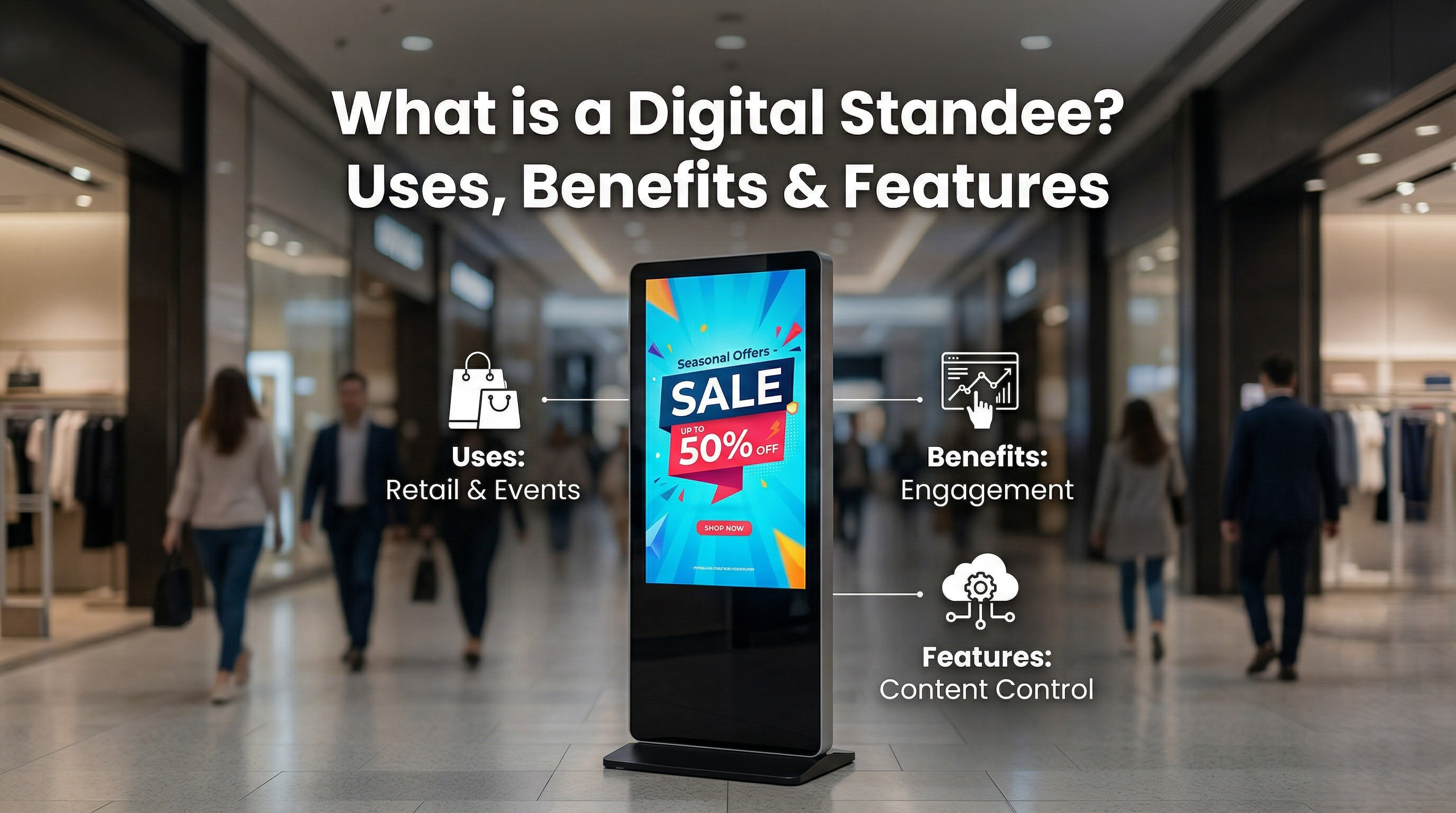
What is a Digital Standee? Uses, Benefits & Features
If you want to grab your customers' attention, static printed banners are no longer enough. Enter the digital standee—a dynamic, visually striking upgrade that is transforming how businesses communicate.
Whether you are walking through an airport, a shopping mall, or a corporate lobby, you have likely seen these sleek, floor-standing screens displaying vibrant videos and interactive menus. But what exactly makes them so powerful for businesses?
In this guide, we will cover exactly what a digital standee is, its top features, standard use cases, and the benefits it brings to your bottom line.
A digital standee is a freestanding, portable electronic display unit used to broadcast dynamic multimedia content like videos, images, and interactive graphics. Powered by digital signage software, these floor-standing screens replace traditional printed banners. They are widely used in retail stores, corporate lobbies, and events to capture audience attention, deliver real-time information, and boost brand engagement.
Digital standees are more than just large TVs turned sideways. They are commercial-grade marketing machines built with specific features:
High-Definition Displays: Most standees feature Full HD or 4K resolution screens. They are built with high brightness levels (nits) to ensure visibility even in well-lit environments.
Built-in Media Players & CMS: They come equipped with internal software (Content Management System) that allows you to schedule, update, and manage content remotely via Wi-Fi or LAN.
Interactive Touchscreens: Many modern models feature multi-touch capabilities, turning a passive display into an interactive digital kiosk for maps, catalogs, or ordering.
Portability & Durability: Housed in sturdy metal or aluminum casings, they are durable enough for public spaces. Many feature lockable caster wheels, making them incredibly easy to move.
Split-Screen Functionality: Software allows the screen to be divided. You can play a promo video on top, scroll a live news ticker at the bottom, and show the weather on the side.
Versatility is the biggest selling point of an electronic standee. Here is how different industries utilize them:
Retail Stores & Malls: Used to showcase new product launches, flash sales, and seasonal promotions right at the entrance to drive foot traffic.
Events & Exhibitions: Perfect for trade show booths. They can display dynamic company presentations, speaker schedules, or interactive venue maps.
Hotels & Restaurants: Used as digital menu boards, self-service check-in kiosks, or welcome boards in lobbies displaying amenities and local attractions.
Corporate Offices: Placed in reception areas to welcome VIP guests, display corporate achievements, or broadcast internal communications to employees.
Healthcare Facilities: Used in hospital waiting rooms to display queue numbers, health tips, and directory assistance.
Why should you upgrade from a traditional flex banner to a floor-standing digital signage unit?
Human eyes are naturally drawn to movement and light. A digital standee displaying a high-quality video will capture significantly more foot traffic than a static, lifeless banner.
While the initial digital standee price is higher than a printed banner, it pays for itself. You completely eliminate the recurring costs of designing, printing, shipping, and discarding physical banners every time a campaign changes.
Did a product sell out? Is there a sudden rainstorm and you want to promote umbrellas? With cloud-based software, you can change the content on your standees across multiple locations instantly with the click of a button.
Traditional marketing relies heavily on plastics, vinyl, and paper that end up in landfills. Digital standees provide a sustainable, zero-waste alternative to promote your brand.
| Feature | Digital Standee | Traditional Printed Standee |
| Content | Dynamic (Video, Audio, Interactive) | Static (Images & Text only) |
| Updates | Instant, remote, and unlimited | Requires re-printing and manual replacement |
| Engagement | Very High | Low to Medium |
| Initial Cost | Higher investment | Low cost |
| Long-Term ROI | High (One-time hardware cost) | Low (Constant re-printing costs) |
| Visibility | Backlit, visible in dark or light | Depends entirely on external lighting |
How much does a digital standee cost?
The price varies based on screen size (typically 43" to 65"), resolution, and whether it has touchscreen capabilities. Basic non-touch models can start around $600–$1,000, while premium interactive kiosks can range from $1,500 to $3,500+.
Can a digital standee be used outdoors?
Yes, but you must purchase a specific outdoor digital standee. Outdoor models are built with weatherproof (IP65-rated) casings, internal cooling systems, and ultra-high brightness screens (1500+ nits) to combat direct sunlight glare.
Do I need the internet to run a digital standee?
Not necessarily. While Wi-Fi allows for remote updates via a CMS, most standees have plug-and-play USB ports. You can load your videos onto a flash drive and plug it directly into the machine for offline playback.
What file formats do they support?
Most modern standees support standard image and video formats, including MP4, AVI, JPEG, PNG, and PDF.
A digital standee is an investment in your brand's image and operational efficiency. By swapping static, easily ignored banners for dynamic, engaging electronic standees, you can capture more attention, deliver relevant real-time information, and ultimately drive more sales.
Whether you need to guide attendees at an event, showcase a mouth-watering menu, or stop mall shoppers in their tracks, floor-standing digital signage is the modern solution.
About the Author: Written by a digital marketing and display technology specialist with over a decade of experience helping retail and corporate brands optimize their in-store customer experiences through modern digital signage solutions.

 Interactive flat Panel
Interactive flat Panel
Interactive flat Panel
 Interactive flat Panel
 Interactive flat Panel